
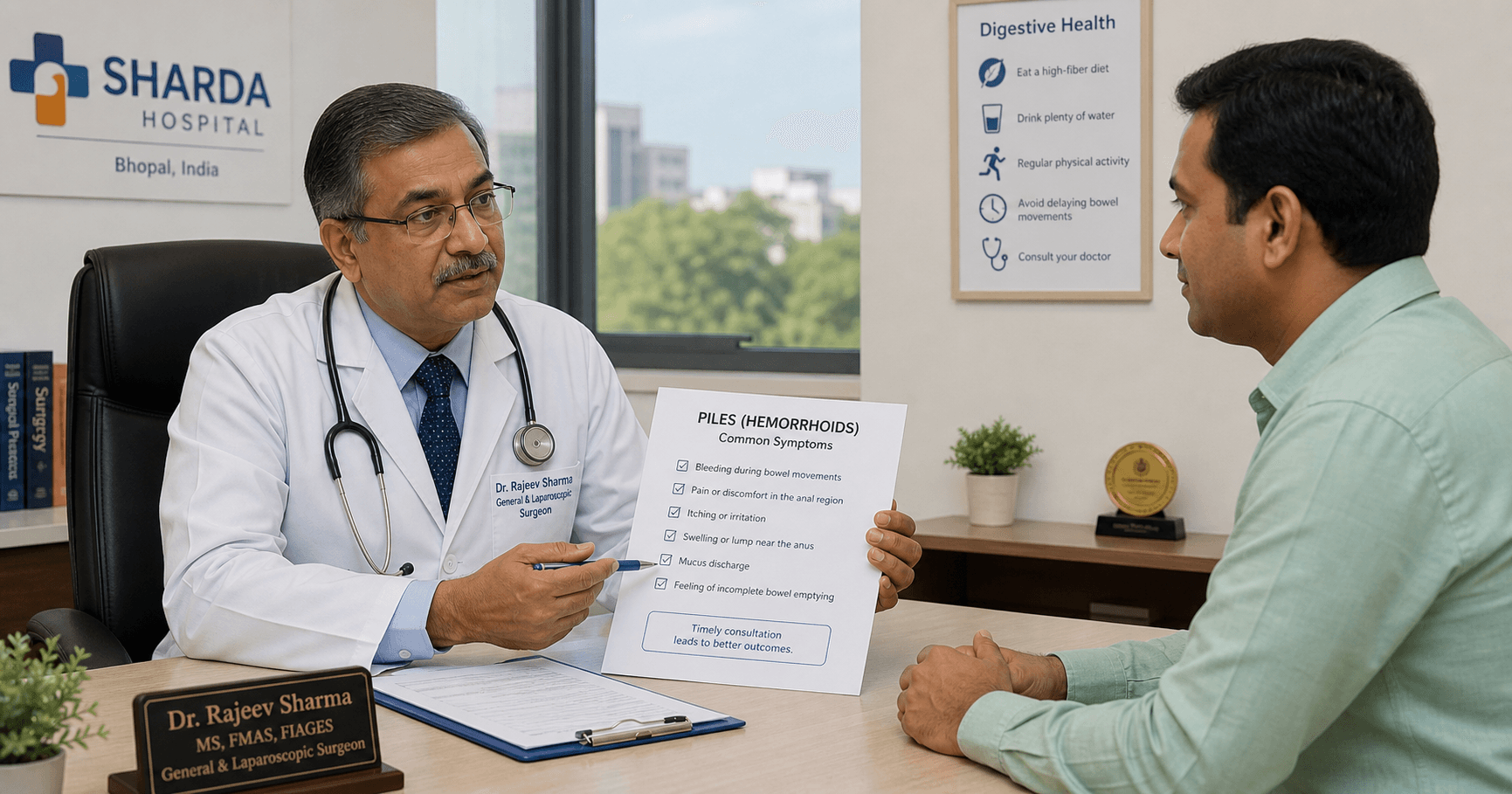
Which doctor should you see for piles symptoms?
For suspected piles, see a doctor who can examine anorectal symptoms and separate piles from fissure, fistula, abscess, bowel inflammation and other causes of rectal bleeding. In Bhopal, a general and laparoscopic surgeon commonly evaluates piles, fissure and fistula concerns and explains whether conservative care, tests, procedures or surgery discussion is appropriate.
Piles, also called hemorrhoids, are swollen veins around the anus or lower rectum. They may cause bright red bleeding, itching, swelling, mucus, discomfort or a lump, but similar symptoms can come from other anal or bowel conditions.
Fast decision rule: routine consultation is reasonable for mild, stable symptoms; book prompt review if bleeding, swelling or painful stool returns; use emergency care first for heavy bleeding, faintness, black stool, fever with anal swelling, severe worsening pain or a patient who looks very unwell.
How do you know if it is piles, fissure or fistula?
You cannot reliably know at home. Piles often causes bleeding, swelling, itching or prolapse. Fissure often causes sharp cutting pain during stool and burning afterward. Fistula often causes recurrent wetness, pus discharge, a boil-like swelling or symptoms after an abscess. These patterns help the consultation, but examination decides the next step.
A useful comparison checklist: painless bright red bleeding or a soft lump points toward piles review; glass-like pain while passing stool points toward fissure review; constant throbbing pain with fever points toward abscess review; repeated discharge from the same area points toward fistula review.
If pain during stool is the main complaint, read /articles/pain-during-bowel-movement-piles-fissure-bhopal before the visit. If bleeding is the main complaint, read /articles/blood-in-stool-piles-fissure-bhopal. If there is a new swelling, /articles/lump-near-anus-piles-abscess-bhopal explains which details and urgent warning signs to note. If itching is the main complaint, /articles/anal-itching-causes-piles-bhopal explains irritants, associated symptoms and safe interim care. If tissue comes out during stool, /articles/piles-coming-out-during-stool-bhopal explains prolapse patterns. If the question is treatment choice, read /articles/piles-fissure-fistula-treatment-options-bhopal.
What should you tell a piles doctor in Bhopal?
Tell the doctor exactly what happens during and after stool: bleeding color, amount, pain timing, swelling, itching, discharge, constipation, diarrhea, straining, toilet sitting time, pregnancy history when relevant, diabetes, blood thinner use and previous episodes. This makes the consultation faster and safer.
Carry previous prescriptions, medicine strips, blood tests, colonoscopy or sigmoidoscopy reports if done, ultrasound or MRI reports if fistula was suspected, diabetes and BP records, allergy history and a list of medicines and supplements.
A practical symptom note should answer five questions: when did it start, what is the worst symptom, what makes it worse, what has already been tried, and what warning signs are present. Do not hide recurrent bleeding, pus discharge, fever, weight loss, black stool or bowel-habit change because those details change the plan.
When should piles symptoms not wait for routine OPD?
Piles-like symptoms should not wait for routine OPD when bleeding is heavy or continuous, stool is black and tar-like, the patient feels dizzy or faint, pain is severe or rapidly worsening, fever occurs with anal swelling, pus discharge is increasing, abdominal pain or vomiting occurs, or the patient appears very weak or unwell.
Emergency rule: if the symptom feels severe, sudden or frightening, call the hospital or go to emergency care first. Online articles cannot decide whether bleeding or infection is safe at home.
Mayo Clinic advises emergency help for significant rectal bleeding with shock-like symptoms and prompt care for heavy or continuous bleeding. NIDDK advises medical care right away for severe anal pain and rectal bleeding, especially with abdominal pain, diarrhea or fever.
What tests or examination might be discussed?
Tests depend on the symptom pattern, age, examination findings and warning signs. A doctor may discuss inspection, digital rectal examination when appropriate, anoscopy or proctoscopy, blood tests, stool tests, sigmoidoscopy, colonoscopy or imaging when deeper bowel disease or fistula anatomy is a concern.
Not every patient needs every test. A short, recent constipation-linked symptom may be handled differently from recurrent bleeding, anemia, black stool, bowel-habit change, family history, weight loss, fever with swelling or persistent discharge.
MedlinePlus anal disorders guidance notes that anal and rectal problems may need history, examination and tests such as digital rectal exam or anoscopy. The point is not to fear tests; it is to avoid guessing when symptoms overlap.
What should you ask before accepting treatment?
Ask diagnosis-first questions before accepting any treatment: is this piles, fissure, fistula, abscess or another bowel concern; what grade or severity is suspected; what can be done safely without surgery; what would make a procedure necessary; what warning signs mean urgent care; and when should follow-up happen?
For piles, treatment discussion may include bowel-habit correction, constipation control, local care, medicines, office procedures or surgery depending on severity and recurrence. This article does not prescribe a treatment because the safe option depends on examination and patient health.
Patients in Bhopal can consult Dr. Rajesh Kanungo at R.K. Hospital, Indrapuri, for diagnosis-first review of piles, fissure, fistula and rectal bleeding symptoms. Use /contact for appointment details, and use emergency care first if warning signs are present.
Which medical sources support this guide?
This guide was cross-checked against NIDDK hemorrhoids guidance at https://www.niddk.nih.gov/health-information/digestive-diseases/hemorrhoids, NIDDK hemorrhoid treatment guidance at https://www.niddk.nih.gov/health-information/digestive-diseases/hemorrhoids/treatment, MedlinePlus hemorrhoids information at https://medlineplus.gov/hemorrhoids.html, MedlinePlus anal disorders guidance at https://medlineplus.gov/analdisorders.html, Mayo Clinic hemorrhoids guidance at https://www.mayoclinic.org/diseases-conditions/hemorrhoids/symptoms-causes/syc-20360268, and Mayo Clinic rectal bleeding guidance at https://www.mayoclinic.org/symptoms/rectal-bleeding/basics/when-to-see-doctor/sym-20050740.
These sources support the same patient-safety message: piles are common, symptoms can overlap with other anal or bowel problems, treatment should follow examination, and heavy bleeding, severe pain, fever, black stool, faintness or a very unwell patient should be handled urgently.
Related care options
More patient guides
Fissure Inside the Anus: What the Pain Pattern Can Mean
A fissure is a small tear in the lining at the anal opening. Sharp pain during a bowel movement, burning that continues afterward and a small amount of bright red blood can fit this pattern, but symptoms alone cannot confirm the cause. Repeated pain or bleeding deserves examination; fever, swelling, pus, heavy bleeding, black stool, fainting or severe worsening pain needs urgent medical care.
Appendicitis Pain Location: Where Does Appendix Pain Usually Start?
Appendicitis pain often begins near the navel and then moves toward the lower right abdomen, but the location can vary. Severe or worsening pain, especially with fever, repeated vomiting, marked tenderness, faintness or a very unwell feeling, needs urgent medical assessment rather than a home diagnosis.
Types of Abdominal Hernias: A Location Guide for Bhopal Patients
Abdominal hernias are named mainly by where tissue pushes through a weak area: the groin, upper thigh, navel, upper midline, abdominal wall or an old surgical scar. Location is a useful clue, but examination—not a photo or symptom list—is what separates a hernia from other lumps and guides safe treatment.
Common questions
A general and laparoscopic surgeon can evaluate piles symptoms, bleeding, swelling, painful stool, fissure-like pain and fistula concerns, then explain safe options after examination.
A physician may help with mild symptoms or first evaluation, but recurrent bleeding, prolapse, severe pain, suspected fissure, fistula, abscess or procedure questions should be reviewed by a surgeon.
Use urgent care for heavy or continuous bleeding, black stool, fainting, dizziness, severe pain, fever with swelling, repeated vomiting, weakness or a patient who looks very unwell.
Carry previous prescriptions, medicine strips, blood tests, colonoscopy or sigmoidoscopy reports if done, diabetes and BP records, blood thinner details, allergies and a written symptom timeline.
Avoid repeatedly self-treating without knowing the cause. Piles, fissure, fistula, abscess and bowel conditions can overlap, and persistent or severe symptoms need medical review.