
What should you wear for laparoscopic surgery?
Wear clean, loose, comfortable clothes that are easy to remove and put on again, plus flat slip-on footwear. A front-opening shirt or kurta and loose trousers with a soft waistband are practical choices. Follow the hospital instruction if you are asked to change into a gown after admission.
Surgery-day clothing means the outfit used to reach the hospital and return home; it is not clothing worn during the operation. The hospital provides the required theatre clothing. Your own outfit should make changing, walking and the journey home easier without pressing on fresh abdominal incisions.
Fast decision rule: choose an outfit that can be removed without stretching, does not squeeze the abdomen and can be managed while movement is slow. If it fails any one of those tests, pick something looser.
Which clothes are easiest after abdominal keyhole surgery?
Loose front-opening tops, roomy T-shirts, soft pajamas, track pants or salwar-style trousers are usually easier than tight jeans, belts, shapewear or clothing with a firm waistband. The best choice depends on the incision locations, dressing, swelling, mobility and the instructions given after the procedure.
Practical comparison: a front-opening top needs less overhead movement; a soft loose waistband reduces pressure near abdominal wounds; slip-on shoes avoid bending to tie laces; and an extra light layer helps if the hospital or journey home feels cool. Bring a slightly roomier size if your usual clothing is fitted.
For recovery planning beyond clothing, /articles/laparoscopic-incision-care-bhopal explains wound and dressing questions, while /articles/sleeping-position-after-laparoscopic-surgery-bhopal covers comfort when resting at home.
Should jewellery, makeup and valuables stay at home?
Leave jewellery, watches and unnecessary valuables at home. Hospitals may ask patients to remove rings, chains, earrings, piercings, contact lenses, makeup or nail products because they can interfere with safe positioning, skin preparation, monitoring or secure storage.
The American Society of Anesthesiologists advises patients to ask what they should remove before surgery and to plan for items such as eyeglasses, contact lenses and hearing aids: https://madeforthismoment.asahq.org/preparing-for-surgery/prep/preparing-for-surgery-checklist/. NHS guidance also tells patients not to bring valuables and notes that jewellery, makeup, nail varnish or false nails may need to be removed: https://www.nhs.uk/tests-and-treatments/having-surgery/preparation/.
Do not remove a piercing that cannot be safely taken out without first asking the hospital. Tell the team about dentures, hearing aids, spectacles, contact lenses, religious items and any assistive device so they can explain when it should be removed and where it will be kept.
What footwear is safest for admission and discharge?
Choose flat, stable, non-slip footwear that is easy to put on without bending. Slip-on sandals or shoes with a secure back are often more practical than heels, loose flip-flops or tightly laced shoes, especially when the patient is sore, drowsy or moving slowly after anaesthesia.
Do not assume you will walk out exactly as you walked in. Anaesthesia, pain, nausea and abdominal discomfort can affect balance and movement. Follow staff instructions about first walking, and use the attendant or mobility support offered by the hospital.
MedlinePlus advises arranging for an adult to drive the patient home after surgery and stay for the recommended period because anaesthesia and medicines can affect safety: https://medlineplus.gov/ency/patientinstructions/000371.htm. Clothing is only one part of discharge planning; transport and support matter more.
What should go in the small clothing bag?
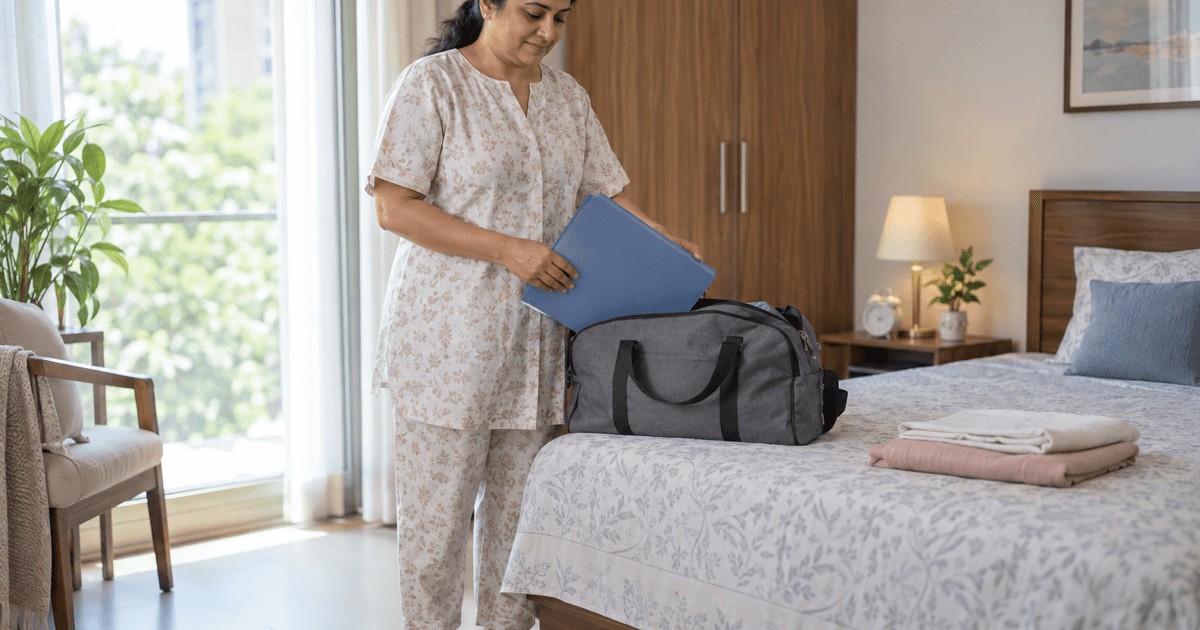
Pack one discharge outfit, underwear, slip-on footwear and a light layer. Add spectacles or a hearing-aid case if relevant. If an overnight stay is possible, ask the hospital whether toiletries or additional clothes are needed instead of bringing a large suitcase.
Keep reports, medicine information and admission papers in a separate folder so clothing does not bury the safety information. /articles/day-of-surgery-checklist-bhopal has the full admission list, including ID, reports, medicines, allergies, fasting instructions and attendant details.
Small-bag checklist: loose top, soft-waist trousers, underwear, stable slip-on footwear, light layer, assistive-device cases and a labelled bag. Leave cash, jewellery and unnecessary electronics at home or with the responsible attendant.
Can compression garments or abdominal belts be worn?
Do not start a compression garment, abdominal binder or hernia belt just because it seems supportive. Whether one is useful depends on the operation, wound, swelling, hernia type, surgeon preference and fit. A garment that is too tight can cause pain, skin pressure or difficulty checking the wound.
Ask the surgeon whether any binder is recommended, when it should begin, how snug it should be and when it must be removed. If a hernia belt is being considered before surgery, /articles/hernia-belt-for-inguinal-hernia-bhopal explains why support does not repair the hernia or replace assessment.
This article does not prescribe a garment. Use only the product and timing advised for your operation, and report increasing pain, breathing difficulty, numbness, skin colour change or wound concerns promptly.
When should a new symptom matter more than the outfit?
Call the treating hospital before travelling if you develop fever, cough, breathing difficulty, chest pain, repeated vomiting, worsening abdominal pain, jaundice, heavy bleeding, fainting, confusion, a painful stuck hernia bulge or another significant change before a planned operation.
Do not hide illness because clothes and transport are already prepared. The team may need to reassess timing, fasting, hydration, infection or anaesthesia safety. Severe, sudden or worsening symptoms should use emergency care rather than waiting for a routine admission slot.
This is general patient education, not diagnosis, prescription advice or a substitute for the written instructions from your surgeon and anaesthesia team. Stable patients in Bhopal can review /services/laparoscopic-surgery and use /contact for a preparation consultation with Dr. Rajesh Kanungo at R.K. Hospital, Indrapuri.
Which reliable sources support this clothing guide?
This guide was cross-checked against American Society of Anesthesiologists preparation guidance at https://madeforthismoment.asahq.org/preparing-for-surgery/prep/preparing-for-surgery-checklist/, NHS surgery preparation guidance at https://www.nhs.uk/tests-and-treatments/having-surgery/preparation/, MedlinePlus night-before-surgery instructions at https://medlineplus.gov/ency/patientinstructions/000371.htm, and American College of Surgeons preparation guidance at https://www.facs.org/for-patients/preparing-for-surgery/.
The shared practical message is to follow the hospital instructions, remove or disclose items that may interfere with care, avoid valuables, arrange safe transport and report health changes before admission.
Related care options
More patient guides
Anal Itching: Is It Piles or Another Cause?
Anal itching can happen with piles, but moisture, skin irritation, stool leakage, infection and other conditions can cause the same symptom. Keep the area gently clean and dry, avoid repeated medicated creams without advice, and arrange medical review if itching persists, recurs or comes with bleeding, pain, swelling or discharge.
Appendix Pain vs Muscle Strain: How Are They Different?
A pulled abdominal muscle is more likely after lifting, exercise or coughing and often hurts with a specific movement or when the muscle is tightened. Appendicitis pain more often worsens over hours, may move from near the navel to the lower-right abdomen, and can occur with appetite loss, nausea, vomiting or fever. Neither pattern confirms a diagnosis at home.
Bilateral Inguinal Hernia: When Both Groins Need Assessment
A bilateral inguinal hernia means a groin hernia is present on both the left and right sides. One side may be more obvious than the other. A surgeon should confirm the finding, assess urgency and explain whether observation, staged treatment or repair of both sides is appropriate for the individual patient.
Common questions
What is the best outfit to wear for laparoscopic surgery?
Wear clean, loose, easy-to-remove clothes with a soft waistband and flat slip-on footwear. A front-opening top can reduce overhead movement. Follow the hospital instruction about changing into a gown.
Can I wear jeans after laparoscopic surgery?
Tight jeans and firm waistbands may press on abdominal incisions or swelling. Pack loose trousers or pajamas for discharge and ask the surgical team if the incision location needs a specific clothing adjustment.
Do I need to remove jewellery before surgery?
Hospitals commonly ask patients to remove jewellery, watches and piercings. Leave valuables at home and tell the team if an item cannot be removed safely or has religious significance.
Can I wear makeup or nail polish for surgery?
The hospital may ask you to remove makeup, nail polish, false nails or contact lenses because they can affect preparation or monitoring. Confirm the exact instruction before admission.
What shoes should I wear home after surgery?
Choose flat, secure, non-slip shoes that can be put on without bending. Avoid heels and unstable loose footwear, and follow staff instructions about walking after anaesthesia.