
What is gas pain after laparoscopic surgery?
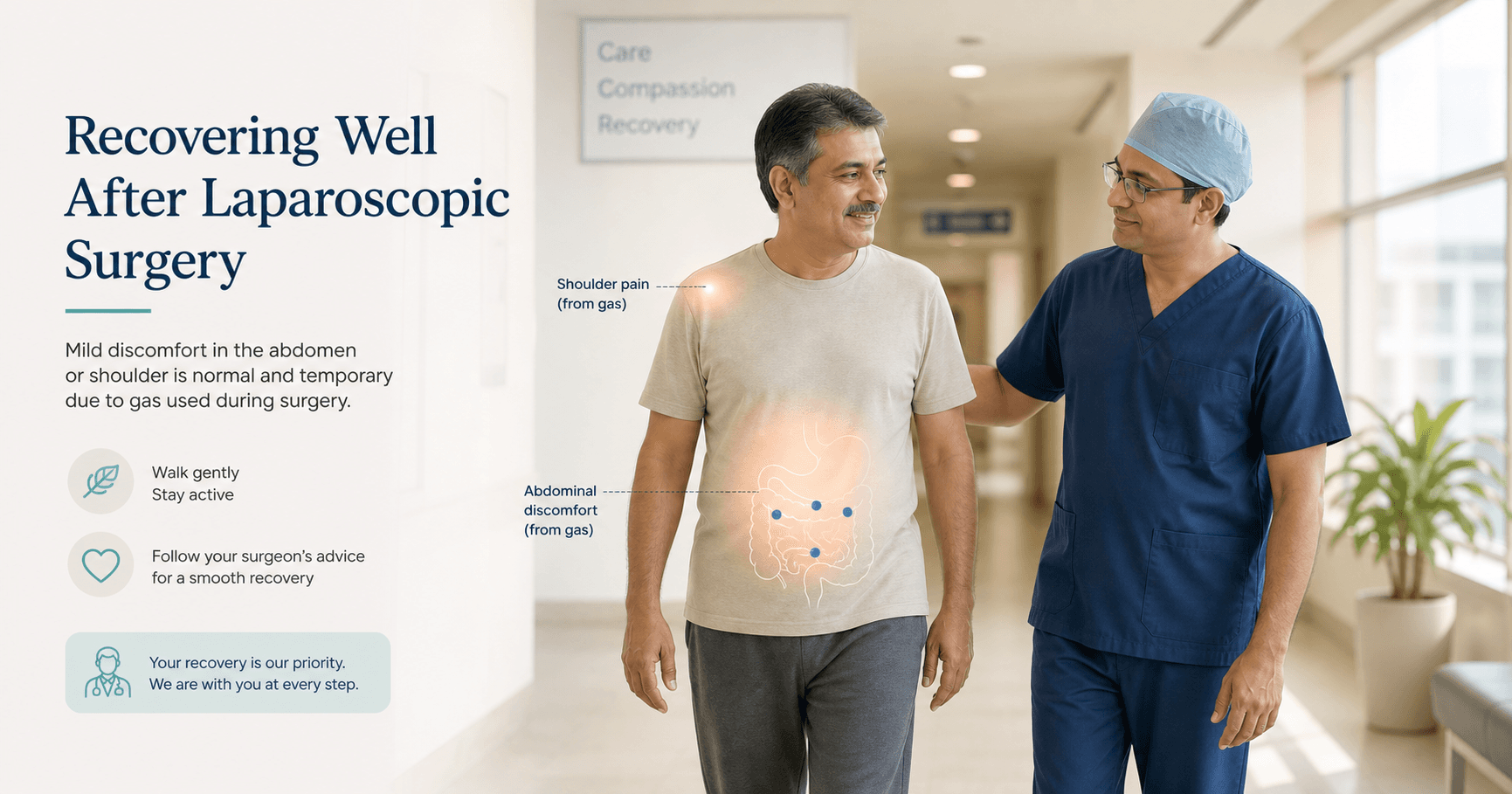
Gas pain after laparoscopic surgery is discomfort, bloating, pressure or shoulder-tip pain that can happen after keyhole surgery. It is often related to carbon dioxide gas used to gently expand the abdomen so the surgeon can see and work safely.
The painful problem is simple: the operation may be over, the cuts may look small, but the patient feels tightness, bloating or shoulder pain and worries something has gone wrong. The desired outcome is to know what can be watched at home, what can be discussed at follow-up, and what should not wait.
Fast rule: improving bloating with mild shoulder discomfort is usually different from worsening abdominal pain with fever, vomiting, fainting, breathlessness, jaundice, bleeding or a patient who looks very unwell. The second pattern needs a doctor or emergency care, not internet reassurance.
Why can shoulder pain happen after laparoscopy?
Shoulder pain after laparoscopy can happen because residual gas may irritate the diaphragm area and the body can feel that irritation as pain near the shoulder. This is called referred pain. It can feel surprising because the shoulder was not operated on.
MedlinePlus explains after laparoscopic gallbladder removal that belly pain and pain in one or both shoulders can come from gas left in the belly after surgery, and that this pain should ease over several days to a week: https://medlineplus.gov/ency/patientinstructions/000117.htm.
SAGES patient information on laparoscopic gallbladder removal also notes that shoulder pain can occur from air put into the abdomen during the operation and usually improves: https://www.sages.org/publications/patient-information/patient-information-for-laparoscopic-gallbladder-removal-cholecystectomy-from-sages/. The exact recovery still depends on the operation and the patient condition.
How long does gas pain usually last?
Gas-related discomfort often improves over a few days, but the timeline is not identical for every patient. Gallbladder surgery, appendix surgery, hernia repair, previous abdominal surgery, infection, constipation, anesthesia medicines and general health can all change the recovery pattern.
A practical decision guide: if bloating is gradually improving, walking is getting easier, food and fluids are staying down, and there is no fever or severe pain, keep following the discharge plan. If pain is increasing each day, the abdomen is becoming more swollen, vomiting repeats, or fever appears, call the surgeon.
The NHS laparoscopy guide says recovery after laparoscopy varies depending on the procedure and patient condition: https://www.nhs.uk/tests-and-treatments/laparoscopy/. That is why a generic number of days should never replace the discharge instructions given after the actual surgery.
What helps relieve gas after surgery safely?
The safest first step is usually gentle movement as allowed by the surgeon. Short walks around the room or corridor can help bowel movement, reduce stiffness and make recovery feel less stuck. Do not force heavy exercise, lifting or bending just because walking is useful.
Patient checklist: walk short distances if permitted, sip fluids as advised, eat only the diet your team allowed, avoid constipation triggers where possible, take only prescribed medicines, support the abdomen while coughing, and keep the follow-up plan. If discomfort is disrupting rest, /articles/sleeping-position-after-laparoscopic-surgery-bhopal gives a position and bed-movement checklist. Do not start random gas tablets, laxatives, painkillers, antibiotics or herbal medicines without asking the treating team.
Memorial Sloan Kettering patient guidance for laparoscopic abdominal surgery encourages walking at home if able and suggests asking the care team about heat or cold packs for shoulder or abdominal pain: https://www.mskcc.org/cancer-care/patient-education/ways-manage-pain-after-laparoscopic-abdominal-surgery. For Bhopal patients, the simpler rule is to use only measures cleared by the surgeon or discharge sheet.
When is gas pain not just gas?
Gas pain should not be assumed when symptoms are severe, worsening or paired with warning signs. Pain after surgery can come from normal healing, gas, constipation, wound problems, bleeding, infection, bile or bowel complications, urinary problems, hernia-related issues or another cause that needs examination.
Call the surgeon or seek urgent care for severe or worsening abdominal pain, repeated vomiting, inability to keep fluids down, fever, chills, fainting, confusion, breathlessness, chest pain, a hard swollen abdomen, no urine, wound discharge, uncontrolled bleeding, yellow eyes, or a patient who looks very unwell.
The American College of Surgeons cholecystectomy patient education page lists concerning post-surgery symptoms such as severe pain, stomach cramping, high fever or chills, yellow skin, and odor or increased drainage from the incision: https://www.facs.org/for-patients/the-day-of-your-surgery/cholecystectomy/. These signs need medical review rather than home guessing.
How is gas pain different from incision pain or constipation?
Gas pain often feels like bloating, pressure, moving discomfort or shoulder-tip pain. Incision pain is usually closer to a cut, stitch, staple or dressing area. Constipation may feel like lower abdominal fullness, difficulty passing stool or gas, and discomfort that changes with bowel movement.
Comparison guide: gas-related discomfort should trend better; incision infection concerns often include spreading redness, warmth, discharge or fever; constipation concerns may include no stool, straining and bloating; emergency concerns include severe worsening pain, repeated vomiting, fever, fainting, breathlessness or a hard distended abdomen.
This guide cannot identify the exact cause in an individual patient. If difficult or absent stool is the main concern, use /articles/constipation-after-laparoscopic-surgery-bhopal to prepare a symptom checklist. If the pattern is unclear, call the treating team and describe the operation date, pain location, fever status, vomiting, bowel movement, urine output and wound appearance.
What should you eat or avoid while bloated after laparoscopy?
Food after laparoscopy depends on the operation and the discharge instruction. Some patients restart a light diet quickly, while others need a slower plan because of nausea, bowel handling, gallbladder surgery, diabetes, acidity, constipation or another medical reason.
Low-effort rule: do not treat bloating by experimenting with heavy oily meals, alcohol, strong home remedies or multiple over-the-counter medicines. Start with the diet allowed by the surgeon, keep fluids steady if permitted, and ask before adding medicines for gas, acidity, loose stool or constipation.
Patients recovering after gallbladder surgery can also read the recovery checklist at /articles/laparoscopic-gallbladder-surgery-recovery-bhopal, while patients worried about wound pain, redness or discharge should review /articles/laparoscopic-incision-care-bhopal before follow-up.
When should Bhopal patients call Dr. Rajesh Kanungo?
Bhopal patients should call for a surgical review when gas pain is not improving, shoulder pain is severe, the abdomen feels increasingly swollen, vomiting repeats, fever appears, wound symptoms develop, or the patient is unsure whether the recovery pattern matches the discharge explanation.
Bring the discharge summary, operation name, medicine list, fever readings, photos of any wound concern, bowel movement details, urine output concerns, and the exact timing of pain. This helps the surgeon separate expected recovery discomfort from symptoms that need tests or emergency care.
For planned follow-up, Dr. Rajesh Kanungo can review laparoscopic surgery recovery at R.K. Hospital, Indrapuri, Bhopal. For severe sudden pain, breathing difficulty, chest pain, fainting, confusion, repeated vomiting, high fever, jaundice, uncontrolled bleeding or a rapidly worsening condition, go to emergency care first.
Which sources support this patient guide?
This guide was cross-checked against MedlinePlus after-surgery guidance at https://medlineplus.gov/aftersurgery.html, MedlinePlus laparoscopic gallbladder discharge guidance at https://medlineplus.gov/ency/patientinstructions/000117.htm, NHS laparoscopy recovery guidance at https://www.nhs.uk/tests-and-treatments/laparoscopy/, SAGES laparoscopic gallbladder patient information at https://www.sages.org/publications/patient-information/patient-information-for-laparoscopic-gallbladder-removal-cholecystectomy-from-sages/, Memorial Sloan Kettering laparoscopic abdominal surgery pain guidance at https://www.mskcc.org/cancer-care/patient-education/ways-manage-pain-after-laparoscopic-abdominal-surgery, and American College of Surgeons cholecystectomy patient education at https://www.facs.org/for-patients/the-day-of-your-surgery/cholecystectomy/.
These sources support the same conservative message: some bloating or shoulder discomfort can happen after laparoscopy, gentle movement may help when allowed, and warning signs such as severe pain, fever, vomiting, jaundice, breathing difficulty, bleeding or worsening illness need prompt medical care.
Related care options
More patient guides
Appendicitis Pain Location: Where Does Appendix Pain Usually Start?
Appendicitis pain often begins near the navel and then moves toward the lower right abdomen, but the location can vary. Severe or worsening pain, especially with fever, repeated vomiting, marked tenderness, faintness or a very unwell feeling, needs urgent medical assessment rather than a home diagnosis.
Types of Abdominal Hernias: A Location Guide for Bhopal Patients
Abdominal hernias are named mainly by where tissue pushes through a weak area: the groin, upper thigh, navel, upper midline, abdominal wall or an old surgical scar. Location is a useful clue, but examination—not a photo or symptom list—is what separates a hernia from other lumps and guides safe treatment.
Can You Live Without a Gallbladder? What Changes After Surgery
Yes. Most people can live a normal life without a gallbladder because the liver keeps making bile. After removal, bile flows directly into the small intestine instead of being stored. Some people notice temporary digestive changes, but persistent or severe symptoms deserve medical review.
Common questions
Mild bloating, pressure or shoulder discomfort can happen after laparoscopic surgery because gas is used during the operation. It should generally improve, not worsen. Severe pain, fever, vomiting or a rapidly swollen abdomen needs medical review.
Gentle walking, fluids and diet as allowed by the discharge instructions may help many patients. Do not start new gas tablets, laxatives, painkillers, antibiotics or herbal remedies without asking the treating team.
It often improves over a few days, but timing varies by operation and patient health. Call the surgeon if shoulder or abdominal pain is severe, worsening, paired with fever or vomiting, or does not match the expected recovery plan.
Seek urgent care for severe or worsening abdominal pain, repeated vomiting, fever with a very unwell patient, breathlessness, chest pain, fainting, confusion, jaundice, uncontrolled bleeding, no urine, or a rapidly worsening abdomen.