
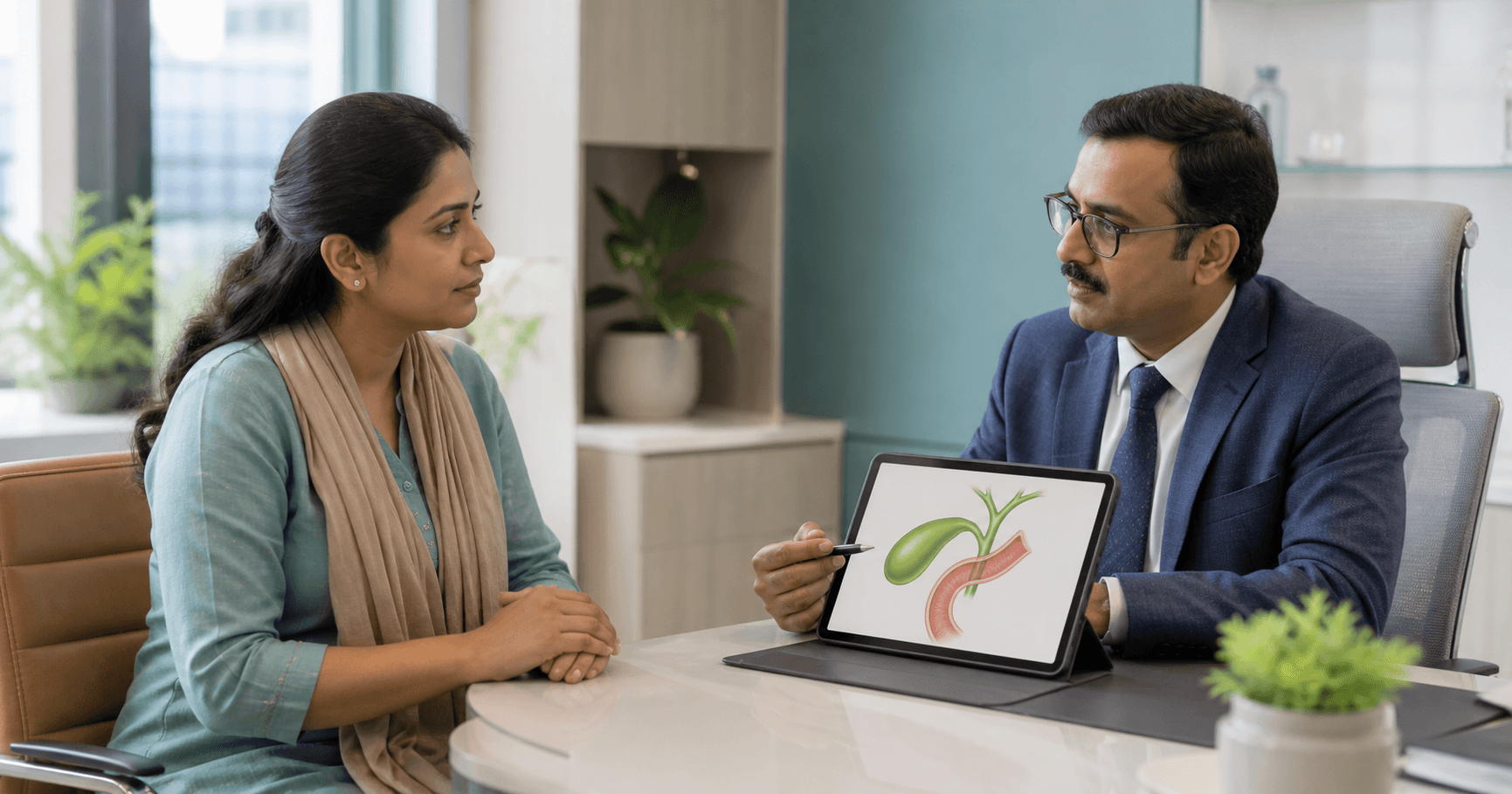
Is diarrhea after gallbladder removal common?
Loose or more frequent stools can occur after gallbladder removal, and for many people the change is temporary. It should not simply be assumed harmless, however. Diarrhea that persists, repeatedly disrupts daily life or comes with dehydration, fever, severe pain, jaundice, vomiting, blood or black stool needs medical assessment.
Post-cholecystectomy diarrhea is loose or frequent stool that begins or becomes noticeable after cholecystectomy, the operation to remove the gallbladder. The timing suggests a possible connection, but it does not prove the cause; infection, medicines, diet and unrelated bowel conditions can produce similar symptoms.
Fast decision rule: mild symptoms that are improving can be recorded and discussed at follow-up; symptoms that are persistent or interfering with eating, drinking, sleep or work should prompt a call to the treating team; severe symptoms or dehydration warning signs need urgent care.
Why can bowel habits change after gallbladder surgery?
The gallbladder stores and concentrates bile between meals. After it is removed, bile flows more continuously from the liver into the small intestine. In some patients, bile acids reaching the colon may contribute to watery stools and urgency, but a clinician should assess the pattern before attaching that explanation to an individual case.
Mayo Clinic notes that diarrhea after gallbladder removal may relate to bile acids entering the large intestine and advises medical review when diarrhea lasts more than four weeks or occurs with weight loss, fever, significant abdominal pain, blood or pus in stool, or waking from sleep: https://www.mayoclinic.org/diseases-conditions/chronic-diarrhea/expert-answers/diarrhea-after-gallbladder-removal/faq-20057813.
The operation itself is not the only possible explanation. A recent antibiotic, another medicine, a stomach infection, a major diet change or a pre-existing digestive condition may also matter. Bring the complete timeline rather than trying to identify the cause from one symptom.
What should you track before calling the surgeon?
A short record makes the consultation more useful. Note when the bowel change began, how many loose stools occur in 24 hours, whether they wake you at night, which meals precede them, and whether there is fever, pain, vomiting, weight change, blood, black stool, pale stool, dark urine or yellow eyes.
One-minute checklist: operation date; laparoscopic or open procedure; discharge date; stool frequency and appearance; fluid intake; urine frequency and colour; temperature if measured; abdominal pain location and trend; current medicines and recent antibiotics; foods that seem linked; and any previous bowel problem.
Also keep the discharge summary and recent reports ready. Do not stop, start or change a prescribed medicine based on an internet article. Ask the operating team whether a medicine could contribute and whether examination or tests are needed. If nausea or vomiting is the main problem, use /articles/nausea-after-gallbladder-surgery-bhopal for a focused warning-sign checklist.
What can you eat while arranging medical advice?
The safest short-term approach is to follow the diet and hydration instructions given by the treating team. Smaller meals may be easier for some patients, and a food-and-symptom record can reveal patterns. A restrictive diet is not a substitute for assessment when diarrhea persists or warning signs appear.
NHS guidance says most people can return to a normal healthy diet after gallbladder removal, although small meals may be easier during the first few days: https://www.nhs.uk/tests-and-treatments/gallbladder-removal/recovery/. NIDDK explains that diarrhea can cause dehydration and advises replacing lost fluids and electrolytes, while people with severe dehydration or other concerning symptoms need medical help: https://www.niddk.nih.gov/health-information/digestive-diseases/diarrhea/treatment.
Avoid turning a temporary food trial into a long elimination diet without professional guidance. For a broader recovery overview, read /articles/what-to-eat-after-gallbladder-surgery-bhopal. If eating also causes significant or worsening abdominal pain, contact the treating team rather than repeatedly testing trigger foods.
Which symptoms need urgent medical attention?
Seek urgent care for inability to keep fluids down, fainting, confusion, marked weakness, very little urine, severe or worsening abdominal pain, repeated vomiting, high fever, blood or black stool, yellow eyes or skin, breathing difficulty, chest pain or a patient who looks seriously unwell.
NIDDK lists dehydration symptoms in adults such as intense thirst, dry mouth, reduced urination, dark urine, tiredness, dizziness and sunken eyes, and advises prompt medical help for dehydration or other serious diarrhea symptoms: https://www.niddk.nih.gov/health-information/digestive-diseases/diarrhea/symptoms-causes. MedlinePlus also advises contacting a clinician for blood or pus in stool, black stool, persistent pain, dehydration signs or diarrhea that does not improve: https://medlineplus.gov/diarrhea.html.
If symptoms are severe or rapidly worsening, go to the nearest emergency department or call local emergency services. Do not wait for an online reply or routine appointment. For stable postoperative concerns in Bhopal, contact the operating hospital or arrange review through /contact.
When should persistent diarrhea be reviewed in Bhopal?
Contact the surgical team when loose stools are not settling, repeatedly interrupt sleep or work, limit food or fluid intake, or occur with weight loss or ongoing pain. The right timing depends on severity, operation details, medicines, hydration, age and other health conditions—not one fixed day count.
A clinician may review the operation history, medicines, hydration and abdominal findings and decide whether stool tests, blood tests or another assessment is appropriate. Persistent symptoms can have several causes, so treatment should follow evaluation rather than self-diagnosis.
Dr. Rajesh Kanungo reviews recovery concerns at R.K. Hospital, Indrapuri, Bhopal. See /services/gallbladder-stone-surgery for the consultation pathway, and /articles/laparoscopic-gallbladder-surgery-recovery-bhopal for questions about activity, wounds and expected recovery milestones.
Which medical sources support this guidance?
This patient-education guide was cross-checked against Mayo Clinic guidance on diarrhea after gallbladder removal at https://www.mayoclinic.org/diseases-conditions/chronic-diarrhea/expert-answers/diarrhea-after-gallbladder-removal/faq-20057813, NHS gallbladder removal recovery guidance at https://www.nhs.uk/tests-and-treatments/gallbladder-removal/recovery/, NIDDK diarrhea symptoms and treatment guidance at https://www.niddk.nih.gov/health-information/digestive-diseases/diarrhea/symptoms-causes and https://www.niddk.nih.gov/health-information/digestive-diseases/diarrhea/treatment, and MedlinePlus diarrhea guidance at https://medlineplus.gov/diarrhea.html.
The consistent message is conservative: bowel changes can occur after surgery, persistent symptoms need review, dehydration and other warning signs should not wait, and individual treatment requires clinical assessment. This page is general education, not diagnosis, prescription, personalized diet advice or emergency triage.
Related care options
More patient guides
Can You Live Without a Gallbladder? What Changes After Surgery
Yes. Most people can live a normal life without a gallbladder because the liver keeps making bile. After removal, bile flows directly into the small intestine instead of being stored. Some people notice temporary digestive changes, but persistent or severe symptoms deserve medical review.
Nail Polish Before Surgery: What Should Patients Remove?
Many hospitals ask patients to remove nail polish, gel or false nails before surgery because staff may need access to a natural nail for monitoring and assessment. The safest shortcut is simple: ask the hospital in advance, follow its written instruction, and tell the team if a product or item cannot be removed safely.
Piles Grades 1 to 4: What Changes at Each Hemorrhoid Stage?
Internal piles are graded by how far they prolapse, not simply by pain or bleeding. Grade 1 stays inside, grade 2 comes out and returns by itself, grade 3 usually needs manual reduction, and grade 4 remains outside. The grade helps structure a treatment discussion, but symptoms, examination and overall health still decide the plan.
Common questions
How long does diarrhea last after gallbladder removal?
It may be temporary, but there is no safe universal timeline for every patient. Contact the treating team if it persists, worsens, disrupts sleep or daily life, or occurs with weight loss, pain, fever, blood or dehydration signs.
Why do I get loose stools after eating since gallbladder surgery?
Bile flows differently after gallbladder removal and may contribute in some patients, but meals, medicines, infection and unrelated bowel conditions can also cause loose stools. A clinician should assess persistent symptoms.
Should I stop eating fat after gallbladder removal?
Do not begin a long restrictive diet solely from online advice. Follow your discharge plan, consider smaller meals if advised, record food and symptoms, and ask the treating team for individualized guidance.
When is diarrhea after gallbladder surgery an emergency?
Seek urgent care for fainting, confusion, very little urine, inability to keep fluids down, severe worsening pain, repeated vomiting, high fever, blood or black stool, jaundice, breathing difficulty or a seriously unwell patient.
Which doctor should review diarrhea after gallbladder removal in Bhopal?
Start with the operating surgeon or hospital because they know the procedure and discharge plan. Persistent bowel symptoms may also need coordinated medical or digestive-system evaluation depending on the findings.