
What should you check on the day of surgery?
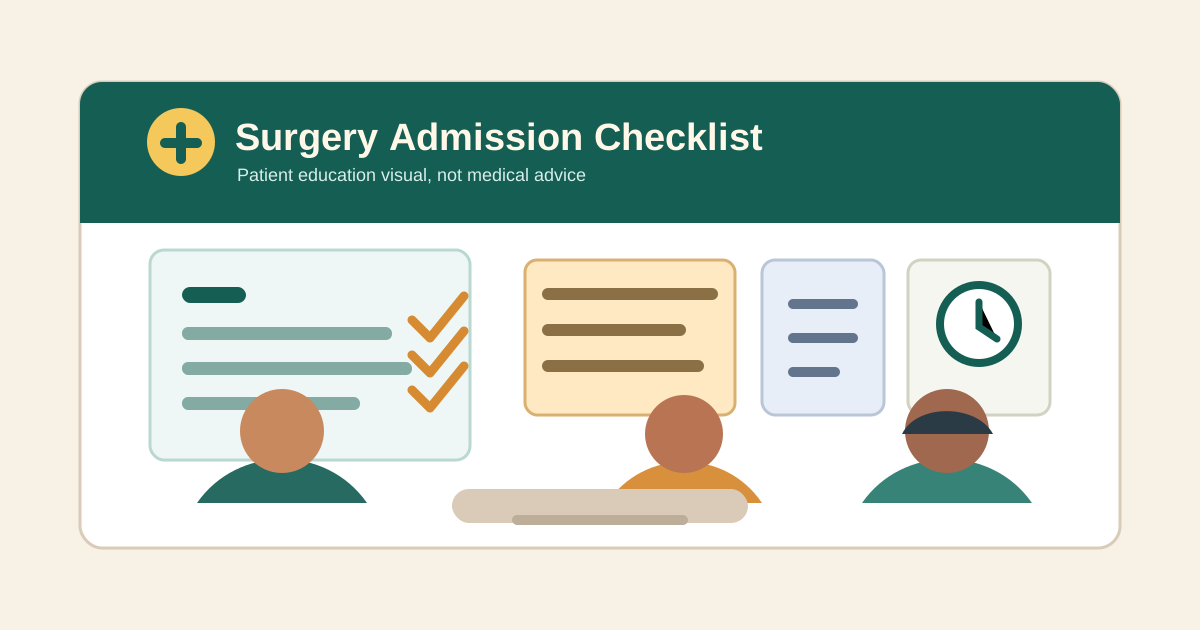
On the day of surgery, confirm your arrival time, fasting instruction, morning medicine plan, report folder, consent questions, attendant arrangement, payment or insurance documents, and hospital contact number. If fever, worsening pain, vomiting, jaundice, chest pain, breathing difficulty or a stuck painful hernia swelling appears, call the treating hospital or use emergency care instead of waiting quietly.
A day-of-surgery checklist is a practical admission-day list that helps the patient, family, surgeon, anaesthesia team and hospital staff start from the same information. It does not decide whether surgery is needed and it does not replace the written instructions from the treating team.
Fast decision rule: before leaving home, check four things aloud with your attendant: food and water timing, medicines taken or held exactly as instructed, all reports in one folder, and the phone number to call if symptoms change on the way.
What should Bhopal patients bring to the hospital?
Bring the admission note or appointment message, photo ID, insurance or estimate papers if relevant, all investigation reports, ultrasound or CT images if available, current medicine strips, allergy details, previous discharge summaries, a small personal bag, spectacles or hearing aids if used, phone charger and one responsible attendant contact number.
The American College of Surgeons advises patients to share medication details with the surgical care team and bring a medication list because medicines may need adjustment before an operation: https://www.facs.org/for-patients/preparing-for-surgery/. MedlinePlus similarly advises bringing a list of medicines to the hospital and contacting the surgeon if medicine instructions are unclear: https://medlineplus.gov/ency/patientinstructions/000371.htm.
Checklist: report folder, medicine list with doses, allergy history, diabetes or BP readings if kept, previous operation notes, fasting instruction, admission time, payment documents, one attendant, comfortable clothes, basic toiletries if overnight stay is possible, and the treating hospital phone number. For report planning before admission, read /articles/pre-surgery-tests-before-laparoscopic-surgery-bhopal.
How should fasting be handled on operation day?
Fasting on operation day should follow the written instruction from the surgeon, hospital or anaesthesia team. Do not copy another patient. Food, milk tea, sweets, chewing gum, tobacco, clear fluids and medicine sips can have different instructions depending on the operation, anaesthesia plan, diabetes, vomiting, urgency and aspiration risk.
NHS guidance explains that if a doctor instructs fasting before surgery, it is important not to eat or drink as instructed because an empty stomach reduces vomiting risk during anaesthesia: https://www.nhs.uk/tests-and-treatments/having-surgery/preparation/. MedlinePlus night-before-surgery guidance also says patients are often told not to eat or drink after a specific time and to take only instructed medicines with a small sip of water: https://medlineplus.gov/ency/patientinstructions/000371.htm.
Practical rule: if the instruction is unclear, call before eating or drinking. Ask separately about solid food, water, tea, milk, diabetes medicines, BP medicines, inhalers and what to do if surgery is delayed. For a deeper fasting guide, keep /articles/fasting-before-laparoscopic-surgery-bhopal open beside the hospital instruction sheet.
Which medicines should be discussed before admission?
Discuss every medicine before admission, especially blood thinners, diabetes medicines, insulin, BP tablets, heart medicines, painkillers, steroids, thyroid medicines, inhalers, supplements and herbal products. This article should not be used to stop, continue, skip, double or restart any medicine.
The American College of Surgeons medicine guidance says patients should fully inform the surgical team about prescriptions, vitamins, minerals, herbs, drugs and supplements because medicines may need adjustment before surgery: https://www.facs.org/for-patients/preparing-for-surgery/medications/. The American Society of Anesthesiologists also advises patients to discuss medicines, supplements, allergies and previous anaesthesia concerns before surgery: https://madeforthismoment.asahq.org/preparing-for-surgery/prep/preparing-for-surgery-checklist/.
Decision table: blood thinners need a written surgeon or physician plan; diabetes medicines need a fasting-day sugar plan; BP and heart medicines need exact morning instructions; inhalers should be mentioned even if symptoms are controlled; painkillers and supplements should be disclosed because bleeding, kidney, stomach or anaesthesia concerns may matter. Patients on blood thinners before gallbladder surgery can also read /articles/blood-thinners-before-gallbladder-surgery-bhopal.
What happens after you reach the hospital?
After arrival, hospital staff usually confirm identity, admission details, fasting status, allergies, medicines, consent, reports, vital signs and the planned procedure. The surgeon or anaesthesia team may recheck important details. If something has changed since the last visit, say it clearly before the operation.
NHS information on the day of surgery says patients may be asked to change into a hospital gown and the details of the operation will be explained before the operation: https://www.nhs.uk/tests-and-treatments/having-surgery/what-happens/. This is the right time to mention new fever, cough, vomiting, worsening pain, missed fasting, a new medicine dose or any confusion about consent.
Useful script at admission: I last ate at this time, last drank at this time, took these medicines today, have these allergies, had these symptoms since the last visit, and brought these reports. Simple, exact answers save time and reduce preventable confusion.
What should your attendant or family member know?
Your attendant should know the planned operation name, expected waiting time, whom to contact for updates, payment or insurance steps, discharge instructions, transport plan, and which symptoms after discharge should trigger a call or emergency visit. The attendant should not be learning everything for the first time after the patient is already admitted.
For planned laparoscopic, hernia, gallbladder, appendix, piles, fissure or fistula care, one calm attendant is usually more useful than many anxious visitors. Keep the report folder, phone, charger, money or payment documents, and doctor contact pathway with the attendant.
Before leaving home, tell the attendant three things: the hospital location and arrival time, the medicine and fasting instruction you followed, and the warning signs you were told to report. If the main concern is what to ask the surgeon, use /articles/questions-to-ask-before-laparoscopic-surgery-bhopal before admission.
When should surgery-day preparation become urgent care?
Surgery-day preparation should become urgent care if the patient has severe or worsening abdominal pain, repeated vomiting, fever with a very unwell patient, yellow eyes, dark urine, chest pain, breathing difficulty, fainting, confusion, heavy bleeding, dehydration signs, or a painful hernia swelling that is stuck and not reducing.
Do not hide new symptoms because a surgery slot is already booked. A planned operation can still need reassessment if infection, dehydration, uncontrolled sugar, very high BP, missed fasting, breathing symptoms or a new emergency concern appears. The safer move is to inform the treating team early. If the operation is delayed, use /articles/surgery-cancelled-postponed-reasons-bhopal to prepare the questions to ask before leaving.
This guide is patient education, not diagnosis, prescription advice or emergency triage. For severe, sudden or worsening symptoms, call the treating hospital, go to emergency care or use local emergency services. For planned surgery questions in Bhopal, Dr. Rajesh Kanungo reviews reports and admission-day preparation at R.K. Hospital, Indrapuri.
How can you reduce same-day surgery stress?
The best way to reduce same-day surgery stress is to remove guessing before you travel: pack the report folder the previous evening, write medicine timings, confirm fasting, arrange transport, choose one attendant, keep loose clothing ready, and avoid last-minute meals, new supplements or unapproved medicine changes.
Hormozi-style simple checklist for patients: make the desired outcome obvious, which is reaching the hospital ready for the planned procedure; increase confidence by carrying proof and reports; reduce time by checking the four admission questions before leaving; reduce effort by keeping one folder and one attendant responsible for the details.
The easiest path is not a bigger internet checklist. It is a diagnosis-first consultation followed by written instructions for your operation, your medicines and your health conditions. If you still have questions about the pre-op visit itself, read /articles/pre-op-appointment-before-surgery-bhopal.
Which reliable sources support this surgery-day checklist?
This patient guide was cross-checked against American College of Surgeons preparation guidance at https://www.facs.org/for-patients/preparing-for-surgery/, American College of Surgeons medication guidance at https://www.facs.org/for-patients/preparing-for-surgery/medications/, MedlinePlus night-before-surgery instructions at https://medlineplus.gov/ency/patientinstructions/000371.htm, American Society of Anesthesiologists preparation guidance at https://madeforthismoment.asahq.org/preparing-for-surgery/prep/preparing-for-surgery-checklist/, NHS surgery preparation guidance at https://www.nhs.uk/tests-and-treatments/having-surgery/preparation/, and NHS day-of-surgery guidance at https://www.nhs.uk/tests-and-treatments/having-surgery/what-happens/.
The shared message is conservative: follow written fasting instructions, bring medicine information, disclose health changes, ask before changing medicines, arrive with reports and support, and seek urgent help for severe or worsening symptoms.
Related care options
More patient guides
Appendix Pain When Lying Down: Does Position Matter?
Pain from appendicitis may feel worse with lying flat, rolling over, getting out of bed, coughing or other movement, but no sleeping position can confirm or rule it out. Lower-right abdominal pain that is worsening, localising, or accompanied by fever, vomiting, appetite loss, swelling or marked tenderness needs prompt medical assessment.
Incisional Hernia Symptoms After Surgery: Bhopal Guide
A new bulge, pressure or pain at an old abdominal operation scar can be an incisional hernia, but symptoms alone cannot confirm it. Arrange a surgical review if the swelling persists or grows; use emergency care for severe pain, vomiting, abdominal swelling, skin discoloration or a hard bulge that will not reduce.
Fever After Gallbladder Surgery: When Should You Call?
A mild temperature can occur during early recovery, but fever after gallbladder surgery should be judged by the measured temperature, timing, trend and accompanying symptoms. Contact the surgical team for a persistent or rising fever, and seek urgent care when fever occurs with severe pain, jaundice, breathing difficulty, confusion or rapid deterioration.
Common questions
What is a day of surgery checklist?
A day of surgery checklist is an admission-day list covering arrival time, fasting, medicines, reports, allergies, consent questions, attendant support, payment papers and warning signs to report before the operation.
What should I bring on the day of surgery in Bhopal?
Bring ID, admission or appointment details, all reports and images, medicine strips or a medicine list, allergy details, previous discharge summaries, insurance or payment documents, phone charger and one responsible attendant contact number.
Can I drink water on the day of surgery?
Follow the written instruction from your surgeon, hospital or anaesthesia team. Do not guess. Ask specifically about water, tea, milk, clear fluids, medicine sips and what to do if surgery is delayed.
Should I take my BP or diabetes medicine on surgery day?
Do not decide from an online article. Share the exact medicine names and doses with the surgeon and anaesthesia team, then follow their written plan for the night before and morning of surgery.
When should I call the hospital before reaching for surgery?
Call the hospital or use emergency care for severe worsening pain, repeated vomiting, fever with a very unwell patient, jaundice, chest pain, breathing difficulty, fainting, confusion, heavy bleeding, dehydration signs or a stuck painful hernia swelling.