
Can you live normally without a gallbladder?
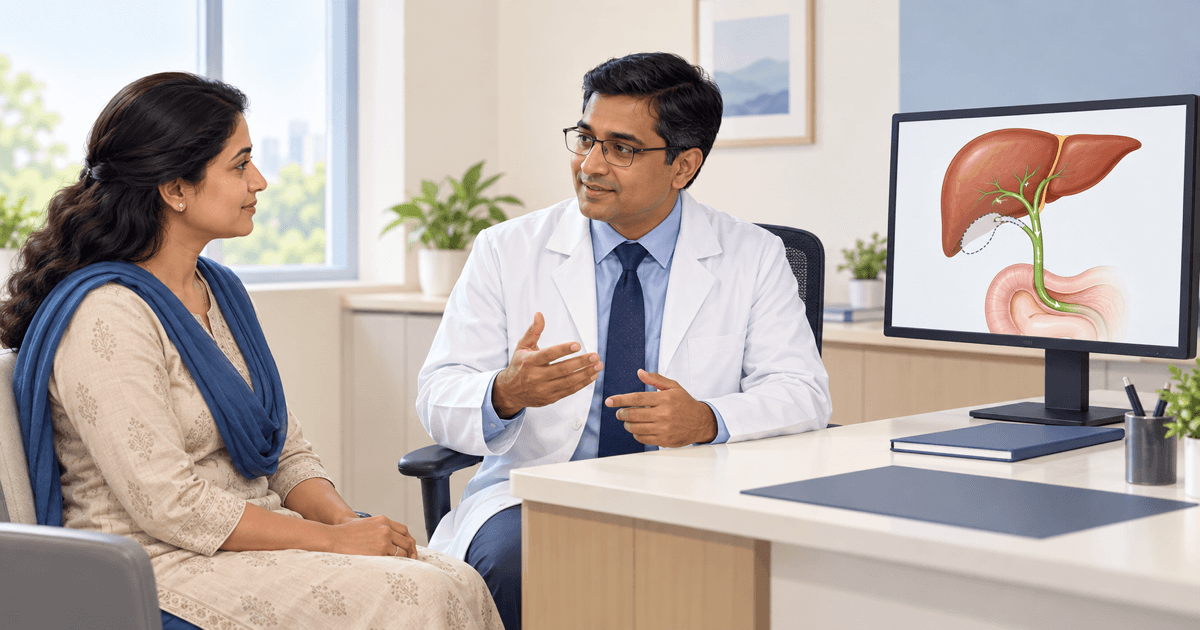
Yes. Most people can live normally without a gallbladder. The liver continues to make bile for digestion; the difference is that bile flows through the bile ducts into the small intestine instead of being stored and released by the gallbladder.
The gallbladder is a small organ that stores and concentrates bile made by the liver. Cholecystectomy is the operation used to remove it, usually because gallstones are causing symptoms or complications.
Fast decision rule: expect gradual recovery and follow the discharge plan, but do not dismiss severe pain, jaundice, fever, breathing difficulty or repeated vomiting as a normal adjustment.
What changes in digestion after gallbladder removal?
Digestion still works because bile is made by the liver, not by the gallbladder. Without the storage pouch, a smaller amount of bile moves more continuously into the intestine rather than being released in a concentrated amount after a meal.
NHS guidance states that people can live without a gallbladder and continue a normal, healthy diet: https://www.nhs.uk/tests-and-treatments/gallbladder-removal/what-is-gallbladder-removal/. This does not promise that every person will feel identical immediately after surgery.
Some patients notice bloating or looser stools during recovery. These symptoms often improve, but a clinician should review symptoms that persist, disrupt eating, cause dehydration or occur with other warning signs.
Do you need a special diet for life?
Most people do not need a permanent special diet after gallbladder removal. A balanced diet is usually the long-term goal. During the first days, smaller meals may feel easier, and individual foods that repeatedly trigger symptoms can be discussed with the treating team.
NHS recovery guidance recommends a normal, healthy diet and notes that small meals may be easier for the first few days: https://www.nhs.uk/tests-and-treatments/gallbladder-removal/recovery/. MedlinePlus also says a normal diet can resume, while greasy or spicy foods may be uncomfortable for a while: https://medlineplus.gov/ency/patientinstructions/000117.htm.
Do not impose an extreme fat-free diet, fasting plan or supplement routine based on a generic internet claim. For a practical first-week food guide, read /articles/what-to-eat-after-gallbladder-surgery-bhopal.
Which changes are common, and which need review?
A few days of incision soreness, tiredness, mild nausea, shoulder-tip discomfort or temporary bowel changes can occur after laparoscopic surgery. The pattern should generally improve rather than become steadily worse.
Decision checklist: improving mild symptoms can usually follow the discharge plan; repeated loose stools or food intolerance deserves a routine clinical review; inability to drink, worsening pain, fever, jaundice, breathing trouble or repeated vomiting needs prompt or emergency assessment.
For symptom-specific guidance, use /articles/diarrhea-after-gallbladder-removal-bhopal or /articles/nausea-after-gallbladder-surgery-bhopal. Those pages help patients record symptoms and identify escalation signs without trying to diagnose the cause online.
How quickly can daily life return after surgery?
Recovery varies with laparoscopic versus open surgery, the reason for surgery, complications, other health conditions and the physical demands of work. Many laparoscopic patients go home the same day or after an overnight stay, then increase activity gradually.
The NHS says return to work may be possible in 1 to 2 weeks depending on the operation and job: https://www.nhs.uk/tests-and-treatments/gallbladder-removal/recovery/. SAGES notes that recovery after open surgery is usually longer than after laparoscopic removal: https://www.sages.org/publications/patient-information/patient-information-for-laparoscopic-gallbladder-removal-cholecystectomy-from-sages/?format=pdf.
Use your surgeon's written instructions for lifting, driving, wound care and medicines. /articles/laparoscopic-gallbladder-surgery-recovery-bhopal gives a broader recovery timeline, while /articles/how-long-does-gallbladder-surgery-take-bhopal explains the operation day itself.
When should you contact a doctor or seek emergency care?
Contact the treating team promptly for symptoms that are not improving, persistent diarrhoea, inability to eat or drink, wound redness or drainage, pain not controlled by the prescribed plan, or any concern that differs from the discharge instructions.
Go to the nearest emergency department or use local emergency services for severe or rapidly worsening abdominal pain, breathing difficulty, chest pain, fainting, confusion, heavy bleeding, yellow eyes or skin, repeated vomiting, high fever, or a person who looks very unwell.
MedlinePlus lists fever, worsening wound changes, uncontrolled pain, breathing difficulty, inability to eat or drink and jaundice among reasons to contact a clinician after gallbladder removal: https://medlineplus.gov/ency/patientinstructions/000117.htm. Do not wait for an online answer when emergency signs are present.
What should you ask before gallbladder removal?
Ask why removal is being advised, whether laparoscopic surgery is suitable, what alternatives apply to your diagnosis, what could require open surgery, what recovery is expected, and which symptoms should bring you back to hospital.
Carry the ultrasound report and images, blood-test results, previous operation records, allergies and a complete medicine list. Do not stop blood thinners, diabetes treatment or other prescribed medicines unless the treating clinician gives an individual plan.
For a diagnosis-first surgical discussion in Bhopal, review /services/gallbladder-stone-surgery or use /contact. The purpose of consultation is to match symptoms, examination, imaging and fitness before deciding whether and when surgery is appropriate.
Which medical sources support this guidance?
This patient-education article was cross-checked against NHS gallbladder removal guidance at https://www.nhs.uk/tests-and-treatments/gallbladder-removal/what-is-gallbladder-removal/, NHS recovery guidance at https://www.nhs.uk/tests-and-treatments/gallbladder-removal/recovery/, MedlinePlus discharge guidance at https://medlineplus.gov/ency/patientinstructions/000117.htm, and SAGES patient information at https://www.sages.org/publications/patient-information/patient-information-for-laparoscopic-gallbladder-removal-cholecystectomy-from-sages/?format=pdf.
The consistent message is reassuring but cautious: people can usually live normally without a gallbladder, digestion continues because the liver still makes bile, short-term adjustment varies, and persistent or severe symptoms need medical review.
This page is general education, not a diagnosis, prescription, personalised diet or substitute for examination. Follow the treating team's written instructions because individual recovery and risk can differ.
Related care options
More patient guides
Nail Polish Before Surgery: What Should Patients Remove?
Many hospitals ask patients to remove nail polish, gel or false nails before surgery because staff may need access to a natural nail for monitoring and assessment. The safest shortcut is simple: ask the hospital in advance, follow its written instruction, and tell the team if a product or item cannot be removed safely.
Piles Grades 1 to 4: What Changes at Each Hemorrhoid Stage?
Internal piles are graded by how far they prolapse, not simply by pain or bleeding. Grade 1 stays inside, grade 2 comes out and returns by itself, grade 3 usually needs manual reduction, and grade 4 remains outside. The grade helps structure a treatment discussion, but symptoms, examination and overall health still decide the plan.
Appendix Burst Symptoms: When Abdominal Pain Is an Emergency
A burst appendix is a medical emergency. Possible warning patterns include abdominal pain that becomes severe or spreads across the abdomen, marked tenderness, a swollen or rigid abdomen, repeated vomiting, fever, weakness, confusion or breathing difficulty. Pain may briefly ease before becoming widespread, so sudden relief does not prove the danger has passed.
Common questions
Can you live a long life without a gallbladder?
Yes. The gallbladder is not essential for survival, and most people can live normally after it is removed because the liver continues to make bile for digestion.
Where does bile go without a gallbladder?
Bile travels from the liver through the bile ducts directly into the small intestine. It is no longer stored and concentrated in the gallbladder.
Do you need a special diet after gallbladder removal?
Most people do not need a permanent special diet. Smaller meals may feel easier at first, and foods that repeatedly trigger symptoms should be discussed with the treating team.
When should symptoms after gallbladder surgery be urgent?
Seek urgent assessment for severe or worsening pain, jaundice, fever, repeated vomiting, breathing difficulty, fainting, heavy bleeding, inability to keep fluids down or a person who looks very unwell.