
What are strangulated hernia symptoms?
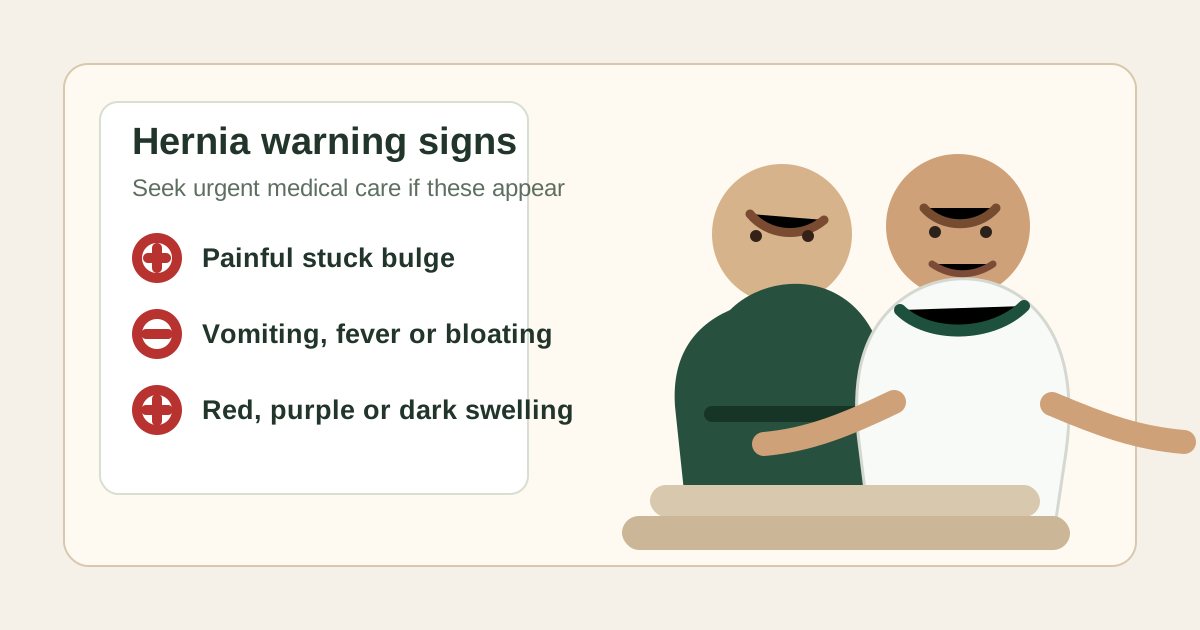
Strangulated hernia symptoms are warning signs that a hernia may be stuck and losing blood supply. The practical danger signs are sudden severe pain, a bulge that will not go back, vomiting, fever, red or dark skin over the swelling, abdominal bloating, constipation or inability to pass gas.
A strangulated hernia is a hernia complication where the tissue trapped in the hernia may lose blood supply. This is different from a soft, reducible swelling that appears while standing and goes back while lying down. Symptoms alone cannot prove strangulation, but warning signs should not wait.
Fast decision rule: if a known or suspected hernia becomes painful and stuck, or appears with vomiting, fever, color change, abdominal swelling or bowel blockage symptoms, go to emergency care or call the treating hospital first. Do not wait for a routine OPD slot.
How is an incarcerated hernia different from a strangulated hernia?
An incarcerated hernia is stuck and cannot easily be pushed back. A strangulated hernia is more dangerous because blood flow to the trapped tissue may be reduced. A patient cannot safely separate these at home, so a stuck painful hernia needs urgent medical evaluation.
UCSF General Surgery explains that an incarcerated inguinal hernia becomes stuck in the groin or scrotum and can lead to strangulation, where blood supply to the trapped intestine is jeopardized: https://generalsurgery.ucsf.edu/condition/inguinal-hernia.
For patients, the useful question is not which label fits perfectly. The useful question is whether the swelling is reducible, whether pain is worsening, whether the patient is vomiting or feverish, and whether emergency review is safer than waiting.
Which hernia symptoms need emergency care now?
Emergency care is safer when a hernia bulge becomes suddenly painful, hard, tender, larger than before, red, purple, dark, hot, stuck, or comes with nausea, vomiting, fever, abdominal bloating, constipation, inability to pass gas, fainting, confusion or a very unwell feeling.
NIDDK advises immediate medical help for inguinal hernia warning signs such as a bulge that no longer goes back, fever, redness, sudden or severe pain, tenderness, and intestinal obstruction symptoms such as abdominal pain, bloating, nausea and vomiting: https://www.niddk.nih.gov/health-information/digestive-diseases/inguinal-hernia.
Mayo Clinic also advises emergency medical care when there is nausea, vomiting or fever, or when the hernia bulge turns red, purple or dark: https://www.mayoclinic.org/diseases-conditions/inguinal-hernia/diagnosis-treatment/drc-20351553.
What should you not do with a painful stuck hernia?
Do not repeatedly force the bulge back, tighten a belt over it, eat a heavy meal, keep taking painkillers to continue work, or wait overnight to compare package cost if the hernia is painful and stuck. The safest next step is medical assessment.
MedlinePlus says that when a hernia becomes strangulated, symptoms may include nausea, vomiting and inability to pass gas or have bowel movements, and surgery is needed right away: https://medlineplus.gov/ency/article/000960.htm.
Decision table: soft swelling that reduces while lying down means planned surgeon review; growing or painful swelling means earlier consultation; painful stuck swelling with vomiting, fever, redness, dark color, bloating or constipation means emergency care; severe chest pain, breathing difficulty, fainting or confusion means emergency care first regardless of the hernia.
Why can waiting be risky if the hernia is strangulated?
Waiting can be risky because trapped intestine or tissue may lose blood supply, swell further, become infected or cause bowel obstruction. The longer a severe stuck hernia is ignored, the more difficult the situation can become for the patient and surgeon.
Cleveland Clinic describes strangulated hernia as a medical emergency that happens when blood flow to tissue or intestine in the hernia is cut off, and notes that severe complications can occur without treatment: https://my.clevelandclinic.org/health/diseases/strangulated-hernia.
This does not mean every hernia is an emergency. Many reducible hernias are assessed in a planned consultation. The danger is using a normal hernia story to explain away a new painful, stuck, vomiting-associated or fever-associated swelling.
What should Bhopal patients carry when going for hernia review?
For a stable patient going to planned review, carry old ultrasound or CT reports, previous surgery papers, medicine list, diabetes and BP records, blood thinner details, allergy history and a written symptom timeline. For severe warning signs, do not delay emergency care just to collect every paper.
Useful symptom notes include: where the swelling is, when it started, whether it goes back on lying down, what changed today, whether vomiting or fever is present, whether stool or gas is passing, and whether the skin over the bulge changed color.
For Bhopal patients, Dr. Rajesh Kanungo evaluates inguinal, umbilical and abdominal wall hernia symptoms at R.K. Hospital, Indrapuri. Stable patients can discuss /services/hernia-surgery planning, /services/laparoscopic-surgery suitability and recovery questions. Severe or worsening symptoms should use emergency care first; stable patients can use /contact for appointment details.
How do you decide between planned consultation and emergency visit?
Use a simple split: stable reducible swelling belongs in planned consultation; painful stuck swelling belongs in urgent or emergency evaluation. If the patient looks very unwell, is vomiting repeatedly, has fever, abdominal swelling, black stool, fainting, confusion or severe pain, emergency care is the right first stop.
Checklist before choosing OPD: Is the bulge soft? Does it reduce while lying down? Is pain mild and not worsening? Is there no vomiting or fever? Is stool or gas passing? Is skin color normal? If any answer worries you, call the hospital or choose emergency care.
If your question is early recognition, read /articles/inguinal-hernia-symptoms-men-bhopal. If your question is whether support is enough, read /articles/hernia-belt-for-inguinal-hernia-bhopal. If a bulge has returned after previous repair, read /articles/recurrent-hernia-after-surgery-bhopal. If surgery is already planned, /articles/hernia-surgery-recovery-time-bhopal can help you prepare work and lifting questions.
Which medical sources support this guide?
This article is patient education, not a diagnosis, prescription, emergency triage tool or replacement for examination. It was cross-checked against NIDDK inguinal hernia guidance at https://www.niddk.nih.gov/health-information/digestive-diseases/inguinal-hernia, Mayo Clinic inguinal hernia guidance at https://www.mayoclinic.org/diseases-conditions/inguinal-hernia/symptoms-causes/syc-20351547 and diagnosis guidance at https://www.mayoclinic.org/diseases-conditions/inguinal-hernia/diagnosis-treatment/drc-20351553, MedlinePlus hernia information at https://medlineplus.gov/ency/article/000960.htm, UCSF inguinal hernia guidance at https://generalsurgery.ucsf.edu/condition/inguinal-hernia, Cleveland Clinic strangulated hernia information at https://my.clevelandclinic.org/health/diseases/strangulated-hernia, and SAGES patient information at https://www.sages.org/publications/patient-information/inguinal-hernia-repair-surgery-sages-patient-information/.
These sources support the same conservative message: a reducible hernia can often be reviewed in a planned setting, but a painful stuck bulge, vomiting, fever, color change, bloating or bowel obstruction symptoms should not be managed by online advice.
Related care options
More patient guides
Nail Polish Before Surgery: What Should Patients Remove?
Many hospitals ask patients to remove nail polish, gel or false nails before surgery because staff may need access to a natural nail for monitoring and assessment. The safest shortcut is simple: ask the hospital in advance, follow its written instruction, and tell the team if a product or item cannot be removed safely.
Piles Grades 1 to 4: What Changes at Each Hemorrhoid Stage?
Internal piles are graded by how far they prolapse, not simply by pain or bleeding. Grade 1 stays inside, grade 2 comes out and returns by itself, grade 3 usually needs manual reduction, and grade 4 remains outside. The grade helps structure a treatment discussion, but symptoms, examination and overall health still decide the plan.
Appendix Burst Symptoms: When Abdominal Pain Is an Emergency
A burst appendix is a medical emergency. Possible warning patterns include abdominal pain that becomes severe or spreads across the abdomen, marked tenderness, a swollen or rigid abdomen, repeated vomiting, fever, weakness, confusion or breathing difficulty. Pain may briefly ease before becoming widespread, so sudden relief does not prove the danger has passed.
Common questions
What is the most important strangulated hernia symptom?
The most important warning pattern is a painful hernia bulge that is stuck and does not go back, especially if pain is sudden or worsening. Vomiting, fever, skin color change, abdominal swelling or inability to pass gas makes it more urgent.
Can I push a stuck hernia back myself?
Do not repeatedly force a painful stuck hernia back. If the swelling is painful, hard, red, dark, vomiting-associated or fever-associated, call the hospital or go to emergency care for medical assessment.
Is vomiting with hernia pain an emergency?
Vomiting with a painful or stuck hernia can be a warning sign of obstruction or strangulation and should be assessed urgently. Use emergency care rather than waiting for a routine appointment.
Which doctor should I consult for hernia emergency symptoms in Bhopal?
For stable hernia symptoms, a general and laparoscopic surgeon can review the swelling and discuss repair options. For severe pain, vomiting, fever, dark color, abdominal swelling or a very unwell patient, go to emergency care first.