
How long does laparoscopic gallbladder surgery recovery take?
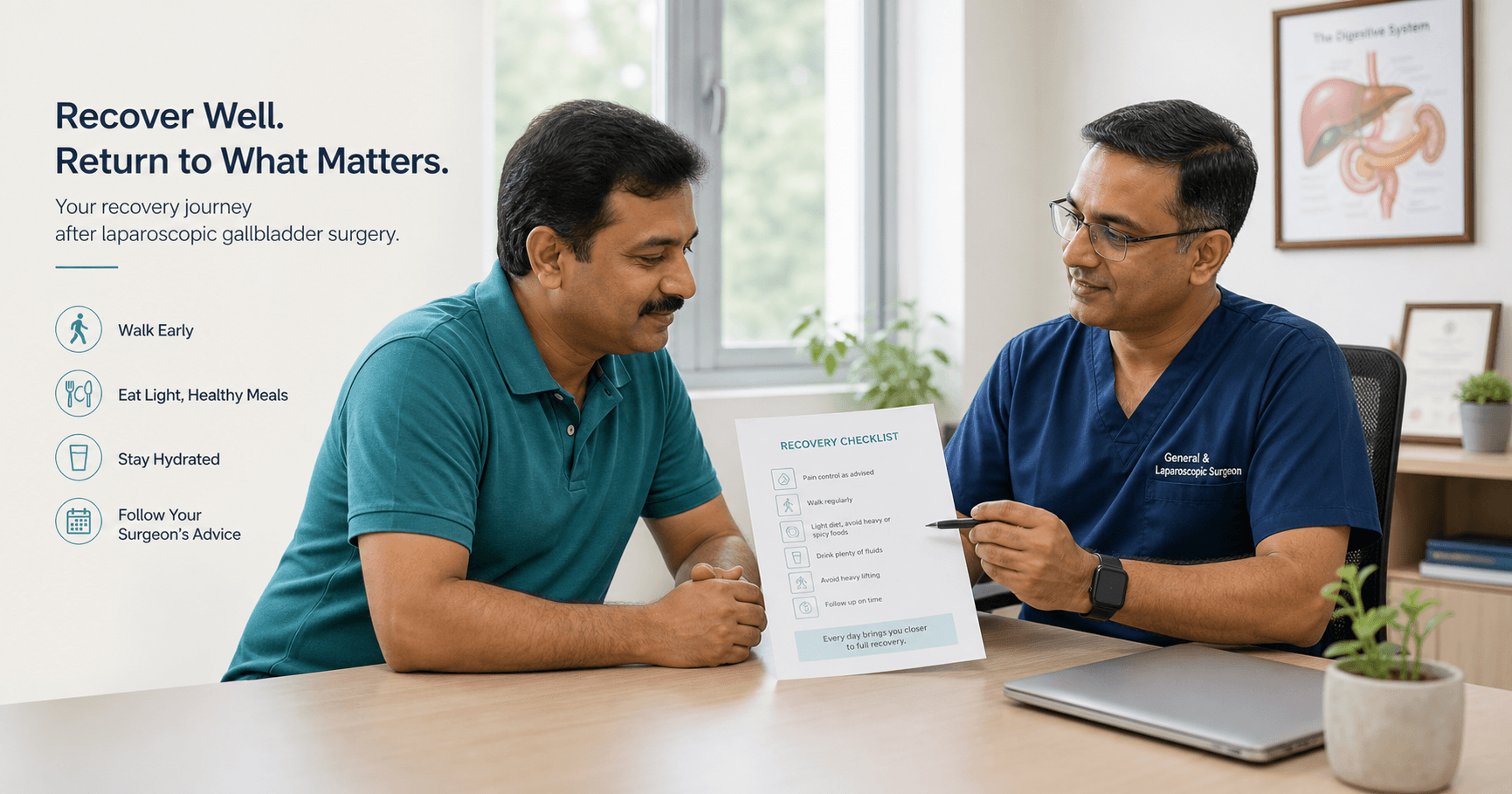
Many patients return to light daily activity within days after laparoscopic gallbladder surgery, but full comfort and normal energy can take longer. A practical recovery plan should cover walking, food tolerance, wound care, pain control, lifting, driving, work timing and follow-up rather than only the discharge date.
Laparoscopic gallbladder surgery recovery is the period after keyhole gallbladder removal when the patient gradually returns to eating, walking, work and normal activity while the small incisions and abdomen heal. It is also called recovery after laparoscopic cholecystectomy.
Fast decision rule: ask for a written discharge plan before going home. If you do not know when to walk, what to eat, how to care for wounds, which medicines to take as prescribed, and when to call the hospital, the recovery instructions are incomplete.
What should you expect in the first week at home?
The first week is usually about gentle movement, simple food, wound care and watching for warning signs. Shoulder-tip discomfort, abdominal soreness, bruising around cuts, mild nausea or loose stools can happen, but worsening symptoms or a very unwell patient should be reviewed promptly. For a focused nausea, vomiting and hydration checklist, see /articles/nausea-after-gallbladder-surgery-bhopal.
MedlinePlus says recovery from laparoscopic cholecystectomy can take up to 6 weeks for most people, with many patients back to most normal activities in a week or two. It also describes possible belly or shoulder pain, nausea, bruising and loose stools during recovery: https://medlineplus.gov/ency/patientinstructions/000117.htm.
For Bhopal patients, the useful question is not "Can I do everything in one week?" The better question is "Which activities are safe for my operation findings, pain level, incision healing, diabetes or BP control, and work type?"
When can you walk, climb stairs, drive and return to work?
Walking is usually encouraged early, while heavy lifting, strenuous activity and driving need case-specific clearance. Desk work may resume earlier than physical labour, but pain, narcotic pain medicine use, fatigue, wound pulling and emergency reaction ability should guide the timeline.
MedlinePlus advises patients to start walking after surgery, use stairs during the first week as tolerated, avoid strenuous activity or heavy lifting for at least a couple of weeks, and discuss work timing with the health care provider. Mayo Clinic notes that many laparoscopic cholecystectomy patients go home the same day and recovery is often about a week, while open surgery takes longer: https://www.mayoclinic.org/tests-procedures/cholecystectomy/about/pac-20384818.
Simple activity checklist: walk short distances several times a day; stop an activity if it causes pain or pulls on the cuts; avoid heavy lifting until cleared; do not drive while taking strong pain medicines; ask separately about office work, field work, two-wheeler riding, gym, travel and lifting children.
What diet is usually discussed after gallbladder removal?
After gallbladder removal, many patients restart food gradually, but greasy or very spicy meals may trigger discomfort or loose stools for some time. Diet advice should be practical: hydration, fibre, smaller meals if needed, and avoiding foods that clearly worsen symptoms during early recovery.
NIDDK explains that after gallbladder removal, bile flows directly from the liver into the small intestine instead of being stored in the gallbladder, and a small number of people may have softer or more frequent stools afterward: https://www.niddk.nih.gov/health-information/digestive-diseases/gallstones/treatment.
MedlinePlus suggests a high-fibre diet, 8 to 10 glasses of water daily to ease bowel movements, and avoiding greasy or spicy foods for a while after laparoscopic gallbladder removal. Do not use online diet lists as a substitute for discharge instructions if you have diabetes, kidney disease, vomiting, dehydration, jaundice or other medical issues.
How should wounds and follow-up be handled?
Wound care depends on how the skin was closed, so patients should follow the discharge sheet rather than copying another patient's routine. The key points are keeping the area clean as instructed, avoiding soaking until cleared, noticing increasing redness or discharge, and attending follow-up.
MedlinePlus notes that some patients may shower after surgery depending on the closure method, but should not soak in a bathtub, hot tub or swimming pool until the surgeon says it is okay. It also suggests a follow-up visit with the provider 1 to 2 weeks after surgery.
Carry the discharge summary, medicine list, photos of any wound concern if taken, and questions about diet, lifting, work, travel and future reports. If a car, train or flight is planned during recovery, review /articles/travel-after-laparoscopic-surgery-bhopal and discuss the itinerary before booking. Patients who had infection, difficult surgery, diabetes, blood thinners, bile duct concerns or conversion to open surgery may need more individualized follow-up.
Which warning signs should not wait?
Seek urgent medical help after gallbladder surgery for breathing difficulty, chest pain, fainting, high fever, severe worsening abdominal pain, repeated vomiting, yellow eyes, heavy bleeding, spreading wound redness, pus-like discharge, confusion, dehydration signs or any patient who looks very unwell. For a temperature-specific call checklist, see /articles/fever-after-gallbladder-surgery-bhopal.
This article cannot decide whether a symptom is safe at home. It is patient education, not diagnosis or treatment advice. If symptoms are severe, worsening, or different from the discharge instructions, call the treating hospital or go to emergency care instead of waiting for a routine appointment. For a focused explanation of stones found after surgery, see /articles/gallstones-after-gallbladder-removal-bhopal.
For a focused day-by-day check of incision, abdominal and shoulder discomfort, read /articles/soreness-after-gallbladder-removal-bhopal. If bowel movements have not restarted, use /articles/constipation-after-laparoscopic-surgery-bhopal and follow the emergency warning signs in your discharge plan.
For planned recovery questions in Bhopal, patients can consult Dr. Rajesh Kanungo at R.K. Hospital, Indrapuri, with their ultrasound, discharge summary, prescriptions and blood reports. For emergencies, the priority is immediate medical evaluation.
Which questions should you ask before discharge?
Before discharge, ask for the recovery rules that apply to your operation, not a generic timeline. The safest plan names what to do today, what to avoid for two weeks, when follow-up is due, which symptoms are urgent, and whom to call if something changes.
Decision checklist: When can I walk and climb stairs? What can I eat tonight and this week? How should I care for each incision? Which medicines should I take exactly as prescribed? When can I drive, work, lift weight and travel? When is follow-up? Which warning signs mean emergency care?
If you are still before admission and want to organize reports, fasting instructions and medicine questions, use /articles/gallbladder-stone-surgery-preparation-bhopal before the planned surgery date.
This also reduces anxiety. Patients searching for "gallbladder surgery recovery time" often want one number, but recovery is easier to manage when it is divided into activity, diet, wound, medicine, follow-up and red-flag decisions.
Which medical sources support this recovery guide?
This guide was cross-checked against MedlinePlus laparoscopic gallbladder removal discharge instructions at https://medlineplus.gov/ency/patientinstructions/000117.htm, NIDDK gallstone treatment guidance at https://www.niddk.nih.gov/health-information/digestive-diseases/gallstones/treatment, NIDDK gallstones overview at https://www.niddk.nih.gov/health-information/digestive-diseases/gallstones, and Mayo Clinic cholecystectomy information at https://www.mayoclinic.org/tests-procedures/cholecystectomy/about/pac-20384818.
These sources support the same practical message: laparoscopic gallbladder removal often allows earlier discharge and activity than open surgery, but the patient still needs individualized discharge instructions, follow-up and urgent care guidance for warning symptoms.
Related care options
More patient guides
Appendix Pain When Lying Down: Does Position Matter?
Pain from appendicitis may feel worse with lying flat, rolling over, getting out of bed, coughing or other movement, but no sleeping position can confirm or rule it out. Lower-right abdominal pain that is worsening, localising, or accompanied by fever, vomiting, appetite loss, swelling or marked tenderness needs prompt medical assessment.
Incisional Hernia Symptoms After Surgery: Bhopal Guide
A new bulge, pressure or pain at an old abdominal operation scar can be an incisional hernia, but symptoms alone cannot confirm it. Arrange a surgical review if the swelling persists or grows; use emergency care for severe pain, vomiting, abdominal swelling, skin discoloration or a hard bulge that will not reduce.
Fever After Gallbladder Surgery: When Should You Call?
A mild temperature can occur during early recovery, but fever after gallbladder surgery should be judged by the measured temperature, timing, trend and accompanying symptoms. Contact the surgical team for a persistent or rising fever, and seek urgent care when fever occurs with severe pain, jaundice, breathing difficulty, confusion or rapid deterioration.
Common questions
How many days does laparoscopic gallbladder surgery recovery take?
Many patients resume light activity within days and most normal activity within one to two weeks, but full comfort and energy may take longer. The timeline depends on the operation findings, pain, wound healing and overall health.
What should I eat after gallbladder surgery?
Follow your discharge instructions. Many patients start with simple food, fluids and fibre, while avoiding greasy or very spicy meals for a while if they trigger loose stools or discomfort.
When can I drive after laparoscopic gallbladder surgery?
Ask your surgeon. Driving is usually avoided while taking strong pain medicines and until pain no longer affects quick movement or emergency reaction.
When should I call the doctor after gallbladder removal?
Call promptly or seek emergency care for high fever, worsening abdominal pain, repeated vomiting, yellow eyes, breathing difficulty, chest pain, fainting, heavy bleeding, spreading redness, discharge from the wound or a very unwell patient.