
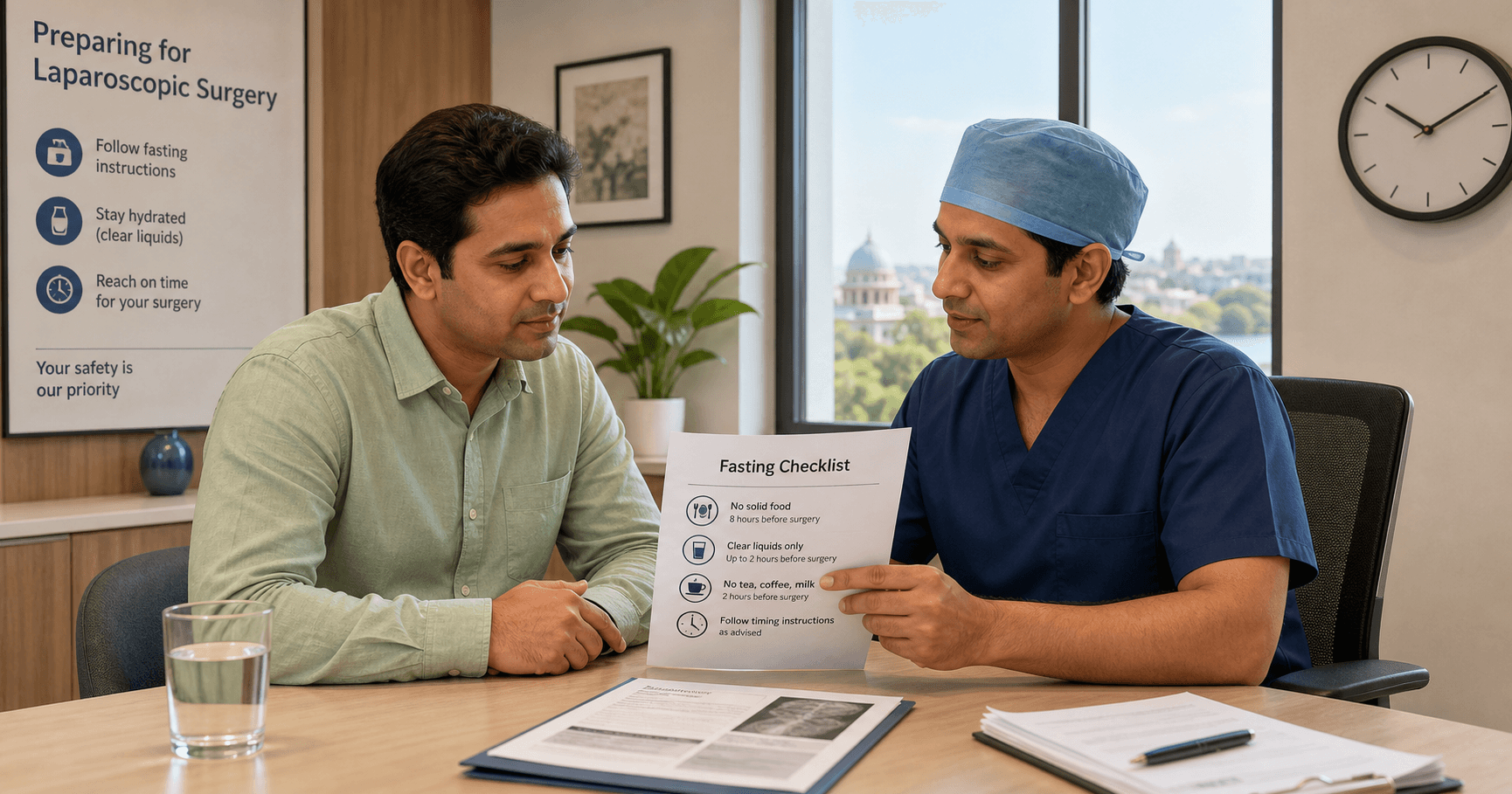
Why does fasting matter before laparoscopic surgery?
Fasting before laparoscopic surgery matters because anesthesia can reduce the body reflexes that normally protect the airway. If food, milk or liquid is still in the stomach, vomiting or aspiration can become a serious risk during sedation or general anesthesia.
Fasting before surgery is the planned gap between the last food or drink and the start of anesthesia. It is a safety instruction, not a punishment and not a weight-loss step. The safest rule is to follow the hospital instruction exactly and tell the anesthesia team honestly what was last eaten or drunk.
The NHS explains that an empty stomach helps reduce vomiting while under anesthesia: https://www.nhs.uk/tests-and-treatments/having-surgery/preparation/. The American Society of Anesthesiologists also links fasting instructions to reducing the rare risk of food or liquid entering the lungs: https://madeforthismoment.asahq.org/preparing-for-surgery/prep/preparing-for-surgery-checklist/.
What should you eat before surgery day?
In the days before planned surgery, the practical goal is to arrive well informed, hydrated and medically optimized, not to follow an extreme diet. Most patients should ask their treating team whether any special diet applies to their operation, diabetes status, bowel symptoms or anesthesia risk.
Fast decision checklist: keep meals simple unless instructed otherwise, avoid trying a new heavy or risky food, do not drink alcohol before the instructed window, keep your medicine list ready, and confirm the exact stop time for solid food, milk, tea, coffee, water and medicines.
This article does not prescribe a diet because gallbladder surgery, hernia surgery, appendix surgery, bariatric surgery and patients with diabetes can need different instructions. For a Bhopal consultation, bring previous reports and ask Dr. Rajesh Kanungo which preparation applies to your specific operation.
Can you drink water before surgery?
Many modern anesthesia instructions allow selected clear liquids closer to surgery than solid food, but patients should not assume this applies to every case. The written fasting instruction from the hospital or anesthesia team is the rule for that patient and that operation.
The American Society of Anesthesiologists fasting guideline states that clear liquids may be taken up to 2 hours before procedures requiring general anesthesia, regional anesthesia, or procedural sedation in appropriate patients: https://www.asahq.org/~/media/sites/asahq/files/public/resources/standards-guidelines/practice-guidelines-for-preoperative-fasting.pdf.
Clear liquid timing can change when there is delayed stomach emptying, diabetes concerns, severe reflux, pregnancy, emergency surgery, bowel obstruction symptoms, obesity-related anesthesia risk, or medicines that affect stomach emptying. If the instruction says nothing by mouth after a certain time, follow that instruction and call before changing it.
Which foods and drinks usually create confusion?
The common confusion is that patients think only a full meal counts. In fasting instructions, snacks, sweets, milk tea, coffee with milk, juice with pulp, chewing tobacco, alcohol, protein drinks and some supplements may matter because they can affect stomach contents or anesthesia safety.
Decision guide: water or clear liquid is not the same as milk tea. A light snack is not the same as a heavy oily meal. Diabetes medicine timing is not the same as BP medicine timing. A morning case is not the same as an afternoon case. Emergency surgery is not the same as planned surgery.
MedlinePlus night-before-surgery guidance warns patients not to eat or drink after the instructed time and to take only medicines the doctor instructed with a small sip of water: https://medlineplus.gov/ency/patientinstructions/000371.htm. This is why written instructions are safer than memory.
How should medicines be handled while fasting?
Medicines should be reviewed before surgery because some are continued, some are adjusted, and some may need temporary changes. Patients should not stop blood thinners, diabetes medicines, BP tablets, thyroid medicine, inhalers, steroids, painkillers or supplements without the responsible doctor instruction.
The American College of Surgeons advises patients to fully inform the surgical team about prescriptions, vitamins, minerals, herbs, drugs and supplements before surgery: https://www.facs.org/for-patients/preparing-for-surgery/medications/. It also notes that routine morning medicines may sometimes be taken with a small sip of water, depending on instructions.
Carry the actual medicine strips or a clear list with dose and timing. Important categories to discuss include aspirin, blood thinners, diabetes tablets, insulin, weight-loss injections, BP medicines, heart medicines, thyroid tablets, steroids, inhalers, pain medicines, herbal products and any previous anesthesia reaction. Patients with BP concerns can review /articles/high-blood-pressure-before-surgery-bhopal, and gallbladder surgery patients who take aspirin or anticoagulants can use /articles/blood-thinners-before-gallbladder-surgery-bhopal as a pre-consultation medicine checklist.
What if you have diabetes, acidity or delayed stomach emptying?
Patients with diabetes, severe acidity or suspected delayed stomach emptying should ask for specific fasting and medicine instructions because ordinary fasting advice may not be enough. The concern is both anesthesia safety and avoiding unsafe sugar changes while waiting for surgery.
MedlinePlus diabetes-before-surgery guidance tells patients to discuss medicines with the provider and notes that some diabetes medicines may need special planning before and after surgery: https://medlineplus.gov/ency/patientinstructions/000702.htm. This supports a simple rule: diabetes instructions should be individualized before admission day.
Call the hospital before admission if blood sugar is repeatedly very high or low, if vomiting starts, if fever appears, or if there is confusion about insulin, tablets or the last drink timing. Do not silently continue into surgery day with unclear instructions.
When can fasting mistakes delay or cancel surgery?
Fasting mistakes can delay or cancel surgery when the anesthesia team believes stomach contents may make anesthesia unsafe. This is frustrating, but it is usually a safety decision, especially for planned laparoscopic operations where timing can be changed more safely than anesthesia risk.
Tell the team if the patient ate, drank, chewed tobacco, had milk tea, took a supplement, vomited, developed fever, had worsening pain, or took a medicine differently from the instruction. Hiding the mistake is more dangerous than reporting it early.
If surgery is urgent, the team may handle risk differently. If surgery is planned, the likely next step may be waiting longer, changing timing, reviewing anesthesia risk, or rescheduling. The patient should ask what happened, what to do next time, and whether symptoms require emergency care instead of waiting.
What should Bhopal patients confirm before admission?
Before admission, Bhopal patients should confirm the operation name, admission time, last solid-food time, last clear-liquid time, medicine instructions, diabetes plan, required reports, payment or insurance documents, attendant plan and emergency contact route.
Use this short checklist in the consultation: What time should I stop solid food? Can I drink water and until when? Which morning medicines should I take? What should I do if I feel feverish or vomit? What if my sugar is low? Who do I call if pain worsens at night?
For a fuller pre-admission conversation, the checklist at /articles/questions-to-ask-before-laparoscopic-surgery-bhopal covers diagnosis, anesthesia, medicine, recovery and cost questions that patients often remember only after leaving the OPD.
For planned laparoscopic surgery at R.K. Hospital, Indrapuri, Dr. Rajesh Kanungo can review reports, procedure-specific preparation and warning signs. For severe sudden pain, repeated vomiting, breathing difficulty, chest pain, fainting, confusion, fever with a very unwell patient, jaundice, or a stuck painful hernia, seek emergency medical care first.
Which sources support this patient checklist?
This guide was cross-checked against MedlinePlus night-before-surgery guidance at https://medlineplus.gov/ency/patientinstructions/000371.htm, MedlinePlus diabetes surgery preparation at https://medlineplus.gov/ency/patientinstructions/000702.htm, NHS surgery preparation guidance at https://www.nhs.uk/tests-and-treatments/having-surgery/preparation/, American Society of Anesthesiologists fasting guidance at https://www.asahq.org/~/media/sites/asahq/files/public/resources/standards-guidelines/practice-guidelines-for-preoperative-fasting.pdf, ASA patient preparation guidance at https://madeforthismoment.asahq.org/preparing-for-surgery/prep/preparing-for-surgery-checklist/, and American College of Surgeons medication guidance at https://www.facs.org/for-patients/preparing-for-surgery/medications/.
These sources agree on the core patient message: follow the exact fasting instruction from the treating team, share all medicines and health conditions, ask before changing medicines, and report illness or fasting mistakes before anesthesia.
Related care options
More patient guides
Nail Polish Before Surgery: What Should Patients Remove?
Many hospitals ask patients to remove nail polish, gel or false nails before surgery because staff may need access to a natural nail for monitoring and assessment. The safest shortcut is simple: ask the hospital in advance, follow its written instruction, and tell the team if a product or item cannot be removed safely.
Piles Grades 1 to 4: What Changes at Each Hemorrhoid Stage?
Internal piles are graded by how far they prolapse, not simply by pain or bleeding. Grade 1 stays inside, grade 2 comes out and returns by itself, grade 3 usually needs manual reduction, and grade 4 remains outside. The grade helps structure a treatment discussion, but symptoms, examination and overall health still decide the plan.
Appendix Burst Symptoms: When Abdominal Pain Is an Emergency
A burst appendix is a medical emergency. Possible warning patterns include abdominal pain that becomes severe or spreads across the abdomen, marked tenderness, a swollen or rigid abdomen, repeated vomiting, fever, weakness, confusion or breathing difficulty. Pain may briefly ease before becoming widespread, so sudden relief does not prove the danger has passed.
Common questions
Can I drink water before laparoscopic surgery?
Sometimes clear liquids are allowed closer to surgery than solid food, but the exact timing depends on anesthesia instructions, operation type and medical risk. Follow the written hospital instruction and call if it is unclear.
What happens if I accidentally eat before surgery?
Tell the surgeon or anesthesia team immediately. The operation may need to be delayed, rescheduled or reviewed for safety. Do not hide food, milk tea, sweets, tobacco, supplements or medicines taken outside the instruction.
Should I stop my diabetes or blood pressure medicines while fasting?
Do not stop or change them yourself. Tell the surgical and anesthesia team exactly what you take, then follow the specific instruction for diabetes medicines, insulin, BP tablets, blood thinners and other regular medicines.
When should I seek emergency care instead of waiting for planned surgery?
Seek urgent medical help for severe or worsening pain, repeated vomiting, breathing difficulty, chest pain, fainting, confusion, fever with a very unwell patient, jaundice, or a painful hernia bulge that is stuck.