
What is the difference between direct and indirect inguinal hernia?
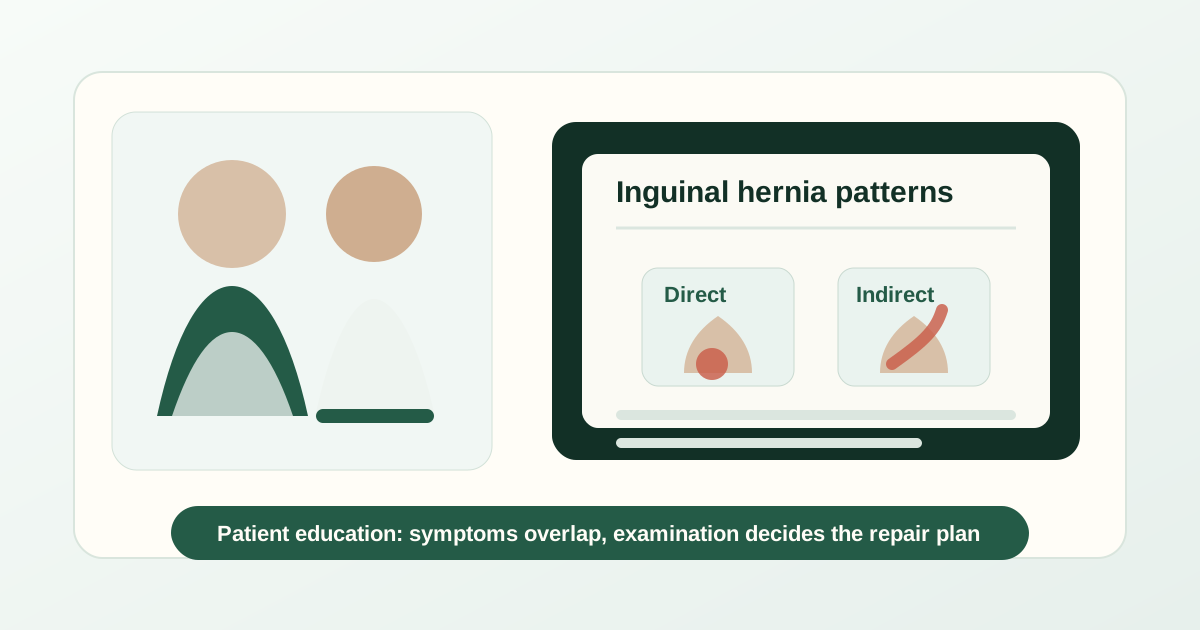
Direct and indirect inguinal hernias are two groin hernia patterns. The difference is mainly anatomical: an indirect hernia follows a natural pathway through the inguinal canal, while a direct hernia pushes through a weak area in the lower abdominal wall.
An inguinal hernia is a bulge near the groin where tissue or bowel pushes through a weak area of the abdominal wall. A direct inguinal hernia is usually linked to acquired weakness. An indirect inguinal hernia is linked to an opening that was present from birth but may show symptoms later.
Fast decision rule: do not try to self-label a groin bulge as direct or indirect at home. If a groin swelling becomes visible while standing, coughing, lifting or straining, book a surgical review and carry any ultrasound or CT report.
Why does the direct versus indirect label matter for patients?
The label matters because it helps the surgeon understand the hernia pathway, recurrence risk, repair planning and whether another groin hernia type is being missed. It does not replace examination, and it should not be used by patients to delay care.
NIDDK explains that indirect inguinal hernias are related to a lower abdominal wall defect present at birth, while direct inguinal hernias are related to a weak area in the inguinal canal wall: https://www.niddk.nih.gov/health-information/digestive-diseases/inguinal-hernia.
For the patient, the practical question is simpler: is there a hernia, is it causing symptoms, is it reducible, are there emergency warning signs, and is observation, open repair or laparoscopic hernia repair the safer plan for this case?
Can symptoms tell whether an inguinal hernia is direct or indirect?
Symptoms alone usually cannot confirm whether an inguinal hernia is direct or indirect. Both can cause a groin bulge, dragging sensation, discomfort while lifting, pain after standing, or swelling that reduces while lying down.
Mayo Clinic lists common inguinal hernia symptoms such as a bulge on either side of the pubic bone, burning or aching at the bulge, groin pain or discomfort, and weakness or pressure in the groin: https://www.mayoclinic.org/diseases-conditions/inguinal-hernia/symptoms-causes/syc-20351547.
Comparison checklist: location near groin, swelling on cough, pain with lifting, swelling into scrotum, report wording such as direct or indirect, and whether the bulge reduces when lying down. For a symptom-first checklist, read the inguinal hernia symptoms in men guide before your consultation.
What should you do if an ultrasound or CT says direct or indirect inguinal hernia?
If a report says direct or indirect inguinal hernia, take it to a surgeon rather than treating the wording as the full answer. Reports help, but the final decision depends on symptoms, examination, size, reducibility, fitness for anesthesia and patient priorities.
A lump below rather than above the groin crease may raise a different question, especially in women. Read /articles/femoral-hernia-symptoms-women-bhopal for the location and urgent-warning-sign checklist, then let the surgeon distinguish the cause.
Mayo Clinic notes that diagnosis is often based on physical examination, and imaging such as ultrasound, CT or MRI may be used when the diagnosis is not readily apparent: https://www.mayoclinic.org/diseases-conditions/inguinal-hernia/diagnosis-treatment/drc-20351553.
Bring the printed report, images if available, previous surgery notes, medicine list, diabetes or BP records, and a simple symptom timeline. In Bhopal, this saves time because the surgeon can connect the report with the actual groin finding.
When is inguinal hernia surgery discussed?
Inguinal hernia surgery is usually discussed when the hernia causes pain, activity limitation, progressive swelling, repeated symptoms, recurrence concern, or risk features on examination. Some minimally symptomatic patients may be observed after surgical advice.
SAGES patient information says inguinal hernias are generally repaired if symptoms affect daily activities, while some hernias without symptoms may be observed after discussion with the surgeon: https://www.sages.org/publications/patient-information/inguinal-hernia-repair-surgery-sages-patient-information/.
The repair choice is not based only on the word direct or indirect. Surgeons also consider first-time versus recurrent hernia, one side versus both sides, previous lower abdominal surgery, age, occupation, cough, constipation, smoking, obesity, diabetes and anesthesia fitness.
Which warning signs should not wait for routine appointment?
Seek urgent medical care if a groin bulge becomes suddenly painful, hard, red, tender, cannot be pushed back, or appears with vomiting, fever, abdominal swelling, inability to pass stool or gas, fainting, confusion or a very unwell patient.
MedlinePlus explains that a hernia can become trapped or strangulated, and that sudden pain, nausea and vomiting can be warning symptoms needing urgent care: https://medlineplus.gov/hernia.html. UCSF also lists severe tenderness, redness, sudden worsening pain, fever and rapid heart rate as concerning signs: https://generalsurgery.ucsf.edu/condition/inguinal-hernia.
Emergency rule: severe worsening pain, vomiting, fever, a non-reducible bulge, chest pain, breathing difficulty, fainting or confusion should go to emergency care first. This article is patient education, not diagnosis, prescription or emergency triage.
What should Bhopal patients ask a hernia surgeon?
Ask whether the hernia is direct, indirect, femoral, recurrent or another groin swelling; whether imaging is enough; whether surgery is needed now; what approach is suitable; and what signs should trigger emergency care before the planned date.
Useful consultation questions: Is my hernia reducible? Is there any sign of obstruction or strangulation? Is laparoscopic repair suitable? Would open repair be safer? Is mesh likely to be discussed? How long should I avoid lifting? When can I return to work? If mesh is part of the discussion, use /articles/hernia-mesh-repair-bhopal to prepare more specific questions.
For patients from Indrapuri, BHEL, Piplani, Raisen Road and nearby Bhopal areas, bring your work details too. A desk worker, shop owner, factory worker, driver and gym trainer may need different recovery and lifting guidance after repair.
How does this connect with hernia surgery recovery and prevention?
The direct versus indirect label helps plan repair, but long-term success also depends on preparation and recovery. Constipation, chronic cough, heavy lifting, smoking, diabetes control, wound care and follow-up can all affect comfort and recurrence risk.
If your main question is timing after repair, read the hernia surgery recovery guide on this site. If your question is whether a belt can safely delay repair, read the hernia belt guide and discuss your specific risk before relying on support garments.
A practical next step is to book a hernia consultation with Dr. Rajesh Kanungo at R.K. Hospital, Indrapuri, Bhopal, especially if the bulge is painful, growing, limiting work or returning after previous surgery.
Which medical sources support this guide?
This guide was cross-checked against NIDDK inguinal hernia guidance at https://www.niddk.nih.gov/health-information/digestive-diseases/inguinal-hernia, Mayo Clinic inguinal hernia symptoms guidance at https://www.mayoclinic.org/diseases-conditions/inguinal-hernia/symptoms-causes/syc-20351547, Mayo Clinic diagnosis guidance at https://www.mayoclinic.org/diseases-conditions/inguinal-hernia/diagnosis-treatment/drc-20351553, SAGES patient information on inguinal hernia repair at https://www.sages.org/publications/patient-information/inguinal-hernia-repair-surgery-sages-patient-information/, MedlinePlus hernia guidance at https://medlineplus.gov/hernia.html, and UCSF inguinal hernia warning-sign guidance at https://generalsurgery.ucsf.edu/condition/inguinal-hernia.
The shared message is conservative: groin hernia type is an anatomical diagnosis, symptoms can overlap, imaging may help selected cases, symptomatic hernias deserve surgical review, and sudden painful or non-reducible swelling should not wait.
Related care options
More patient guides
Sleeping Position After Laparoscopic Surgery: A Safe Comfort Guide
There is no single sleeping position that is safest for every laparoscopic operation. Unless the surgical team gave a position restriction, use the position that lets you breathe comfortably and rest without pulling on wounds—often the back with support at first—then change position gradually as comfort allows.
Smoking Before Surgery: When Should You Stop?
Smoking before surgery can affect breathing, anaesthesia planning, wound healing and recovery. The useful next step is not to hide it or guess at a perfect quit date: tell the surgeon and anaesthesia team exactly what you use, how often, and when you last used it, then follow their written plan.
Piles Coming Out During Stool: When Does a Prolapse Need Review?
Tissue that comes out during a bowel movement may be prolapsed piles, but rectal prolapse and other anal conditions can look similar. Note whether it returns by itself, needs gentle pressure, stays outside, bleeds or becomes painful, then arrange an examination rather than trying to grade it at home.
Common questions
Is indirect hernia worse than direct hernia?
Not automatically. The risk depends on symptoms, reducibility, size, age, overall health, previous surgery and examination findings. A surgeon should review the patient instead of judging risk by the label alone.
Can I know direct versus indirect inguinal hernia from symptoms?
Usually no. Both can cause groin swelling, pain, heaviness or discomfort with coughing and lifting. Examination and sometimes imaging are needed to classify the hernia.
Does direct or indirect hernia need surgery?
Surgery may be discussed when symptoms affect activity, swelling increases, complications are suspected, or the surgeon feels repair is safer than observation. The decision is case-specific.
When is an inguinal hernia an emergency?
Urgent care is needed for sudden severe pain, a hard or red bulge, a bulge that cannot go back in, vomiting, fever, abdominal swelling, inability to pass stool or gas, fainting or a very unwell patient.